
Maritime Single Window: Keep Port Clearance Separate from Cargo Release
No.
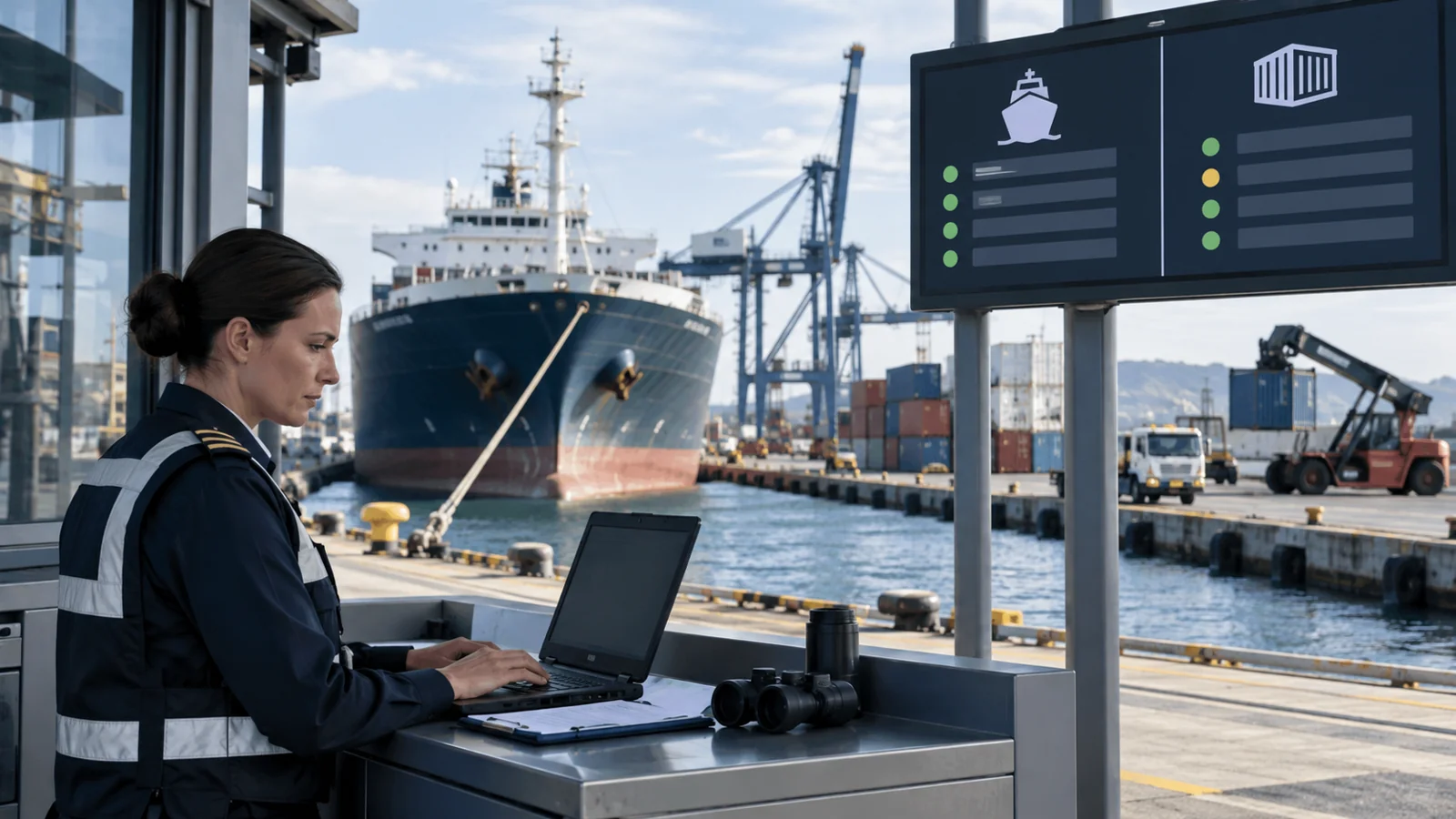
AI-generated editorial illustration.
Does a maritime single window mean cargo is cleared for delivery?
No. A maritime single window supports the electronic exchange of port-call information, but a successful submission does not by itself prove customs release, carrier release or the consignee's right to collect goods. Identify which process a status message belongs to and obtain the separate confirmations needed for the actual shipment and port.
Understand the purpose of the system
IMO's maritime single window guidance explains the framework for electronic port information exchange and its mandatory implementation under the FAL regime from 2024. Local systems and procedures still need to be understood in practice. This is not a new universal cargo-release rule introduced in September 2026.
Digital messages can appear definitive while describing only one stage. “Accepted”, “submitted” or “cleared” should always be connected to the system, document and authority concerned. Ask what the status permits, what remains outstanding and who can provide the next confirmation.
Keep the processes distinct
| Process | What it may establish |
|---|---|
| Port-call submission | Information provided for the vessel's arrival or departure |
| Customs process | The applicable goods-related regulatory position |
| Carrier release | The carrier's requirements for delivery have been addressed |
| Document entitlement | The party authorised under the transport arrangement |
| Terminal collection | The practical appointment and gate requirements |
Build a checklist around the actual port rather than assuming that one account or reference covers every process. Document which agent, broker, carrier and consignee is responsible for each step. A shared view of outstanding items can prevent staff from waiting for someone who believes their own task is complete.
A fictional status misunderstanding
An importer sees a successful digital port submission and tells its haulier to collect. The terminal cannot release the container because a separate carrier requirement remains unresolved. The importer should obtain the precise missing item and assign it to the correct party, instead of repeatedly resubmitting the port-call information.
Save the system reference, timestamp and relevant response. Where an error is corrected, retain a trace of the correction and who authorised it. Do not circulate account credentials or sensitive vessel and cargo information outside the appropriate channels.
Insurance evidence benefits from clear records
If delayed release results in additional cost or alleged damage, the chronology should show which requirement prevented movement. An accepted electronic message does not establish carrier liability or an insured loss. Different policies may address cargo, professional services or liabilities under their own terms.
See the international entity and insurance guide, review cargo insurance information, and submit the actual journey and custody arrangements for assessment.
Key takeaways
- Identify the system and process behind each status.
- Separate vessel clearance, goods clearance and delivery authority.
- Preserve timestamps and responsibility for unresolved requirements.
Frequently asked questions
Does a maritime single window mean cargo is cleared for delivery?
No. A maritime single window supports the electronic exchange of port-call information, but a successful submission does not by itself prove customs release, carrier release or the consignee's right to collect goods. Identify which process a status message belongs to and obtain the separate confirmations needed for the actual shipment and port.
Sources & further reading
General information, not a coverage determination or offer. Actual cover is subject to policy wording, insurer terms, underwriting and applicable law.