
Port Congestion: Separate Late Delivery from Insured Cargo Damage
Port congestion alone does not establish an insured loss.
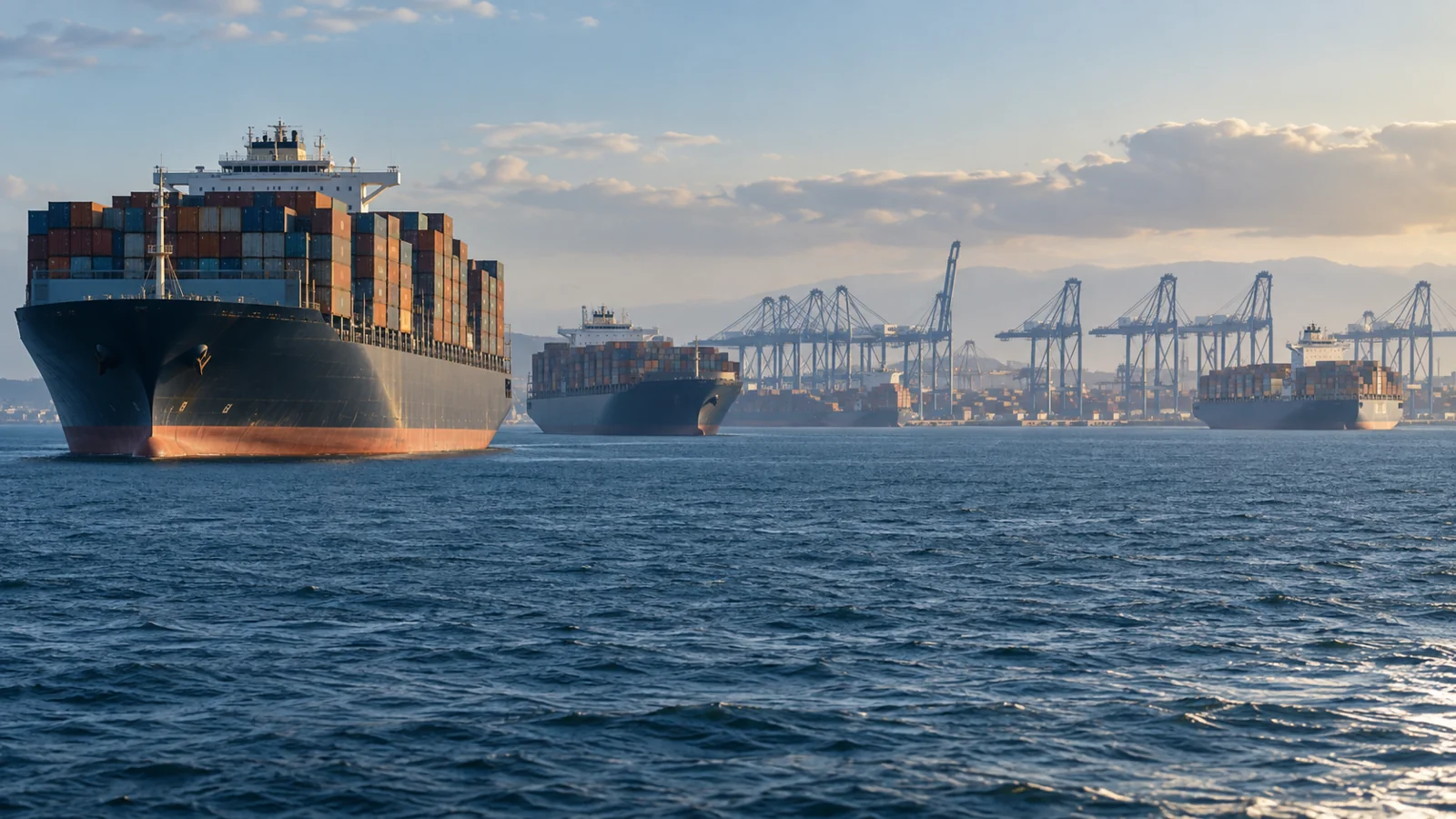
AI-generated editorial illustration.
Does port congestion mean cargo insurance will pay?
Port congestion alone does not establish an insured loss. Identify whether the goods suffered physical damage, the cause of that damage, the transit or storage stage involved and the applicable wording. Late delivery, lost sales and additional operating charges can be treated differently from cargo damage, even when they arise during the same congested period.
Measure the part of the journey that is delayed
The U.S. Bureau of Transportation Statistics freight indicators, updated on 8 September 2026 when checked for this guide, separate several port and freight measures. That distinction is useful operationally: a ship waiting offshore, a discharged container awaiting clearance and a truck unable to collect are not the same bottleneck.
For your shipment, replace a general congestion headline with a sequence of actual events. Record arrival, discharge, availability, holds, appointment attempts and collection. Ask which party can change the next step and what evidence confirms that the goods remain appropriately protected.
Match the decision to the exposure
| Cargo situation | Practical question |
|---|---|
| Goods remain on board | Is the expected discharge plan confirmed? |
| Container is in the terminal | What custody and storage conditions apply? |
| Temperature-sensitive goods | Is temperature control maintained and recorded? |
| Proposed off-site storage | Is the location suitable and within agreed cover? |
| Buyer cannot receive | Who can authorise an alternative delivery plan? |
Request a written estimate of additional charges and identify its assumptions. An estimated cost can help compare options, but should not be represented as a fixed debt or a recoverable insurance amount before the contract and facts are checked.
A fictional choice between waiting and moving
A trader's container is discharged into a busy terminal. An alternative warehouse is offered inland, but the goods require dry storage and careful handling. The trader should compare the likely delay with the suitability, custody records, transport arrangements and insurance implications of the proposed move.
Moving quickly is not automatically the safer financial choice. Conversely, waiting without checking cargo condition or accumulating charges may also increase exposure. Document the options available at the time, the approvals obtained and the reason for the decision. This helps an insurer or other reviewer understand the response without relying on hindsight.
Preserve damage evidence if it emerges
If damaged goods are discovered, record their condition before repacking or disposal where safe and appropriate. Notify relevant parties promptly, preserve packaging and arrange suitable inspection under the applicable procedures. A congestion notice may explain context; it does not prove when or why moisture, impact or deterioration occurred.
The guide to changed and rejected cargo journeys explains why a later movement needs its own review. Explore cargo insurance enquiries, and submit the proposed storage and onward route before relying on assumed extensions.
Key takeaways
- Identify the delayed handover and the party able to resolve it.
- Evaluate alternative storage before authorising a move.
- Keep commercial delay and physical cargo damage distinct.
Frequently asked questions
Does port congestion mean cargo insurance will pay?
Port congestion alone does not establish an insured loss. Identify whether the goods suffered physical damage, the cause of that damage, the transit or storage stage involved and the applicable wording. Late delivery, lost sales and additional operating charges can be treated differently from cargo damage, even when they arise during the same congested period.
Sources & further reading
General information, not a coverage determination or offer. Actual cover is subject to policy wording, insurer terms, underwriting and applicable law.