
Container Condensation: Packing Records That Help Explain Wet Cargo
Establish where moisture came from, how the goods and packing were prepared, and what conditions they experienced during transit.
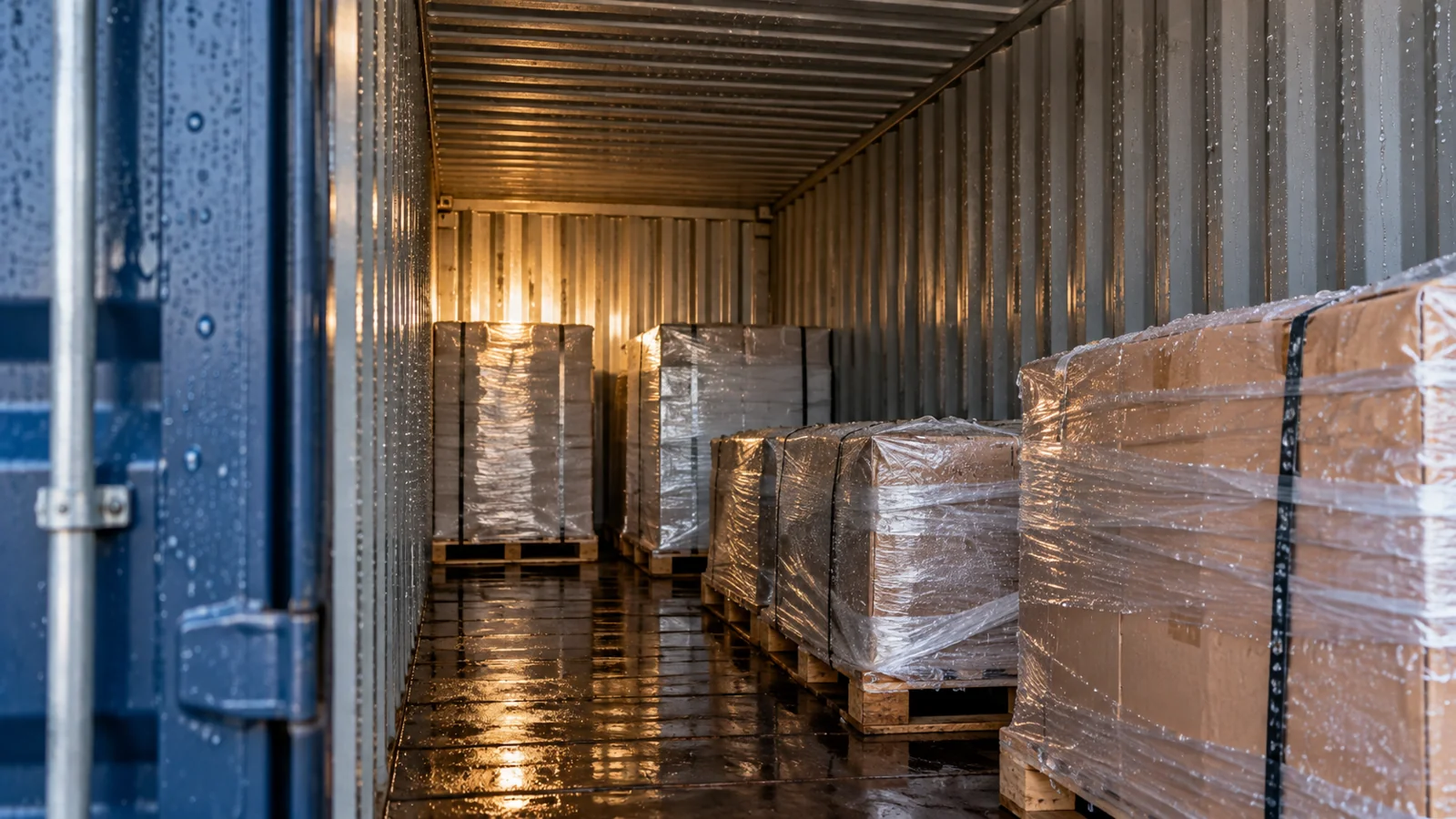
AI-generated editorial illustration.
How should you investigate container condensation damage?
Establish where moisture came from, how the goods and packing were prepared, and what conditions they experienced during transit. Condensation, external water entry and pre-existing moisture can produce different evidence and coverage questions. Wet cargo alone does not prove a container leak, carrier fault or an insured cause of loss under the applicable policy.
Start before the container is closed
TT Club's wet-damage guidance highlights moisture and container-condition considerations. Use an appropriate packing assessment for the actual goods and route. Generic advice about ventilation or moisture-control materials should not replace product-specific technical judgment.
Record the cargo and packaging condition, container identity and relevant inspection findings before loading. If goods or timber packaging already contain moisture, that can matter later. A photograph of the closed doors cannot establish the condition of everything inside.
Preserve the evidence that distinguishes causes
| Evidence | Question it helps investigate |
|---|---|
| Pre-loading condition | Was moisture or damage present before transit? |
| Container inspection | Were relevant defects recorded? |
| Packing information | What protection and materials were used? |
| Receiving photographs | Where was wetting found and how was it distributed? |
| Environmental records | What relevant temperature or humidity information exists? |
Take a systematic receiving record before goods are moved or repacked, where safe and practical. Identify which packages were affected and which were not. A pattern across the load can be more informative than a close-up of the worst damaged item alone.
A fictional mixed-cause enquiry
A receiver finds rust on machinery and moisture on the container roof. The investigation should not stop at the first plausible explanation. Review pre-loading condition, packaging, any visible defects, the journey and the distribution of damage. Appropriate inspection may be needed to distinguish causes and assess the extent of loss.
Avoid discarding packaging or repairing the goods before checking the relevant notification, survey and consent requirements, while still taking necessary protective action. Record urgent steps and the reasons for them so the response remains understandable.
Explain the wording question precisely
Packing-related exclusions, inherent characteristics and the particular cause of wetting can matter under cargo terms. “All risks” does not mean that causation and exclusions no longer need examination. Submit the chronology and evidence rather than demanding payment solely because the goods arrived wet.
Read the steel cargo condition and survey guide, review cargo insurance enquiries, and submit the cargo's moisture sensitivity and packing arrangements when arranging future cover.
Key takeaways
- Preserve condition evidence before loading and at receipt.
- Investigate moisture source rather than assuming a leak.
- Keep packaging and distribution-of-damage records available.
Frequently asked questions
How should you investigate container condensation damage?
Establish where moisture came from, how the goods and packing were prepared, and what conditions they experienced during transit. Condensation, external water entry and pre-existing moisture can produce different evidence and coverage questions. Wet cargo alone does not prove a container leak, carrier fault or an insured cause of loss under the applicable policy.
Sources & further reading
General information, not a coverage determination or offer. Actual cover is subject to policy wording, insurer terms, underwriting and applicable law.