
How Digital Marine Insurance Certificate Verification Works
A practical verification process for comparing a marine certificate with its issuer’s live record while protecting private information.
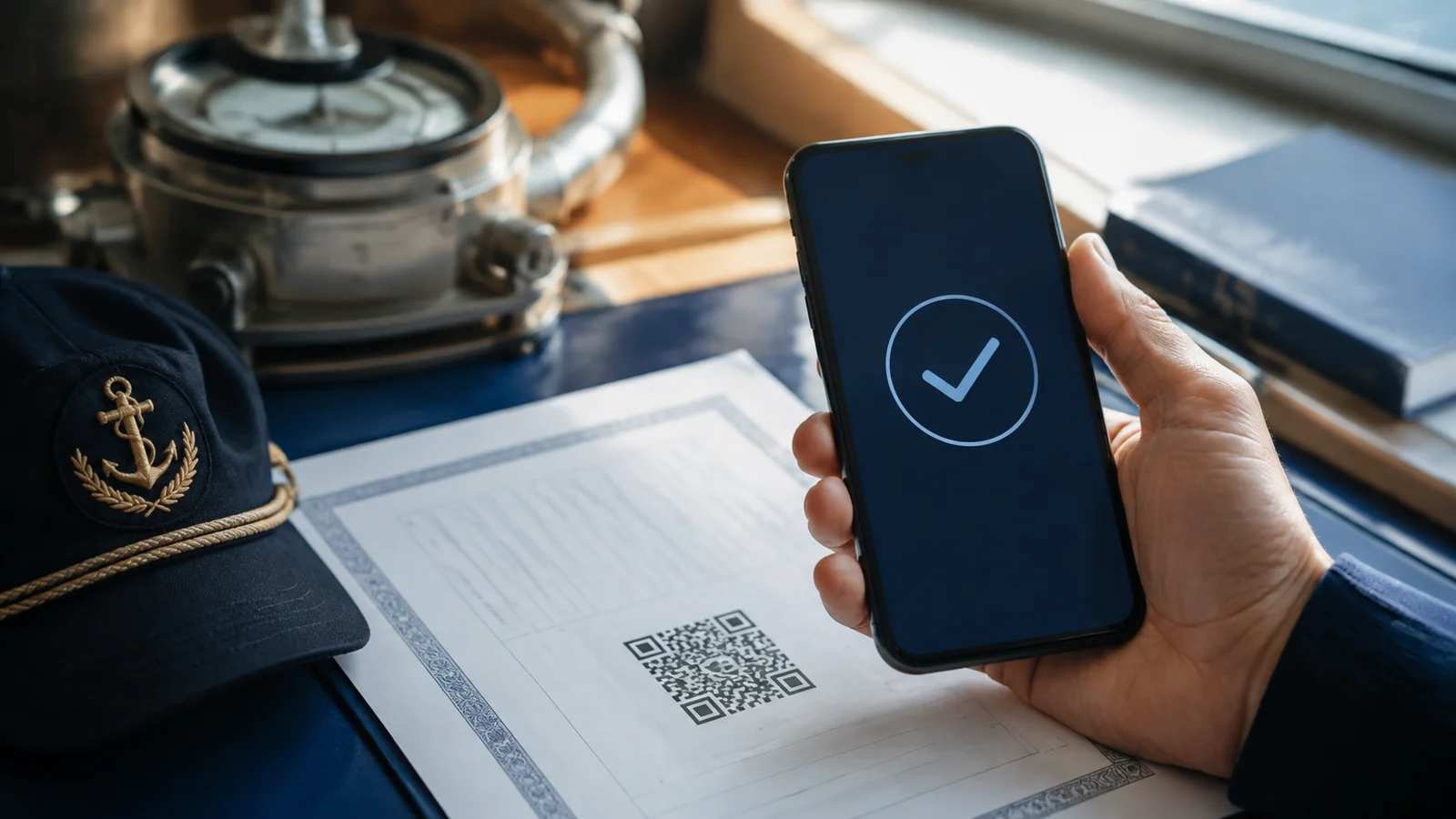
AI-generated editorial illustration.
Digital verification helps a recipient compare a marine insurance certificate with the issuing platform’s record. It is useful because a PDF can be copied, edited or remain in circulation after a later version is issued. The verification result should show what is recorded now and make the relevant status clear.
Verification has limits. It does not turn a commercial certificate into a statutory document, establish that every claim will be paid or override policy conditions. A careful recipient checks authenticity, identity, current status and the document’s purpose separately.
Start with the domain, not the appearance
A polished PDF and familiar logo are not sufficient evidence of authenticity. If the document contains a QR code, inspect the destination before opening it. The address should be the issuer’s genuine domain, not a similar-looking spelling or an unrelated payment site.
NCSC: QR codes, what is the real risk? explains that QR codes can be used to direct people to fraudulent websites, including through phishing messages. A QR image is therefore a convenient link, not a security guarantee by itself.
Use contact details obtained independently from the genuine organization if you need clarification. Do not rely exclusively on a telephone number printed beside a questionable QR code. If the page asks for unrelated credentials or an unexpected payment, stop and verify through a trusted channel.
Compare the live record with the document
Check certificate number, insured company, vessel name and IMO where applicable, coverage type, limit, currency and policy dates. Compare the insurer and issue date as shown. Differences should be investigated rather than dismissed because most fields match.
For example, a copied certificate might retain a genuine verification link while its visible insured name or limit has been altered. Opening the real page and comparing the details can reveal that mismatch. Merely seeing a green status on the page is not enough if the page describes a different interest.
Record the verification time and any reference needed for your internal file. Avoid collecting or circulating information beyond what is necessary for the purpose of the check.
Understand the status labels
In the MarineEnergyCover design, a valid record is distinguished from expired, cancelled, superseded and revoked records. “Superseded” indicates that an earlier document has been replaced; the recipient should request the current version and check the reason for the change where relevant.
An expired record may still be relevant to a historical incident, but its effect requires the policy period and facts to be considered. It should not be presented as evidence of current cover. Cancellation or revocation likewise requires direct clarification from the issuer rather than assumptions based on the old PDF.
The verification page’s statement is deliberately limited: it confirms that the digital record matches a certificate issued within the platform. Coverage remains subject to the policy wording, terms and conditions.
Why secure tokens and document versions matter
A human-readable certificate number helps people communicate about a record. It should not be the sole security mechanism for public access. The specified platform uses a separate unpredictable verification token so that a simple sequence of numbers is not the route to browsing customer records.
Versioning preserves the relationship between an original issue, corrections and later changes. A document hash can help detect whether a file differs from the recorded version, but a hash alone does not explain whether the underlying insurance is in force. Status and authorized policy records remain necessary.
Recipients do not need to understand the technical implementation to perform a useful check. They need a genuine destination, a clear current result and enough information to compare the document accurately.
A fictional corrected-certificate example
A cargo buyer receives a certificate with an incorrect currency. The issuer corrects the approved record and issues a replacement, marking the original as superseded. Both PDFs may remain in email archives, but only the current record explains which version should be used.
A recipient who scans the old code should see the old version’s status and contact the issuer or insured for the correct document. The recipient should not edit the currency locally and keep using the old certificate number as if nothing changed.
This example illustrates document control. It does not determine how a particular policy correction affects an insured event, which may require specialist assessment.
Keep private information out of public verification
The public record should disclose only approved certificate facts. Bank instructions, client email, private documents, underwriting notes and sensitive ownership evidence do not belong on a public verification page. Those materials should remain in authenticated, authorized workflows.
A counterparty checking a certificate should not need access to the client’s entire portal. Conversely, a client wanting the full policy wording should use the secure document center rather than expect the public verification page to reveal it.
Use the verification route, compare all relevant fields and escalate discrepancies to the issuing team. Treat successful verification as one step in checking the evidence you have been given, with the underlying contract still governing coverage.
Frequently asked questions
What should I do if the QR code opens an unfamiliar website?
Do not enter credentials or make a payment. Check the genuine issuer through independently obtained details and ask for the correct verification route before relying on the document.
Does valid status guarantee that my loss is covered?
No. It describes the certificate record. Whether a particular loss is insured depends on the policy, dates, facts, conditions and applicable law.
Can I verify a certificate without seeing the client’s private documents?
That is the purpose of a limited public verification record. Only approved certificate details should appear; confidential application and underwriting material should remain protected.
Related reading
- What is a marine insurance certificate
- How to apply for marine insurance online
- Choosing marine insurance for an international shipping business
Sources and editorial review
Prepared by the MarineEnergyCover editorial desk. Updated 7 September 2026. Expert and, where relevant, compliance review are pending; no reviewer has been appointed. Examples are fictional and explain questions to investigate, not coverage decisions. Sources provide general context and do not describe MarineEnergyCover’s capacity, authority or policy terms. Insurance availability remains subject to underwriting, applicable law and the agreed contract.
Frequently asked questions
What should I do if the QR code opens an unfamiliar website?
Do not enter credentials or make a payment. Check the genuine issuer through independently obtained details and ask for the correct verification route before relying on the document.
Does valid status guarantee that my loss is covered?
No. It describes the certificate record. Whether a particular loss is insured depends on the policy, dates, facts, conditions and applicable law.
Can I verify a certificate without seeing the client’s private documents?
That is the purpose of a limited public verification record. Only approved certificate details should appear; confidential application and underwriting material should remain protected.
Sources & further reading
General information, not a coverage determination or offer. Actual cover is subject to policy wording, insurer terms, underwriting and applicable law.