
IMDG Code 42-24: A 2026 Dangerous-Goods Booking Checklist
Use the current applicable IMDG requirements to classify, document, pack and offer dangerous goods for sea transport, and obtain the carrier's acceptance for the actual shipment.
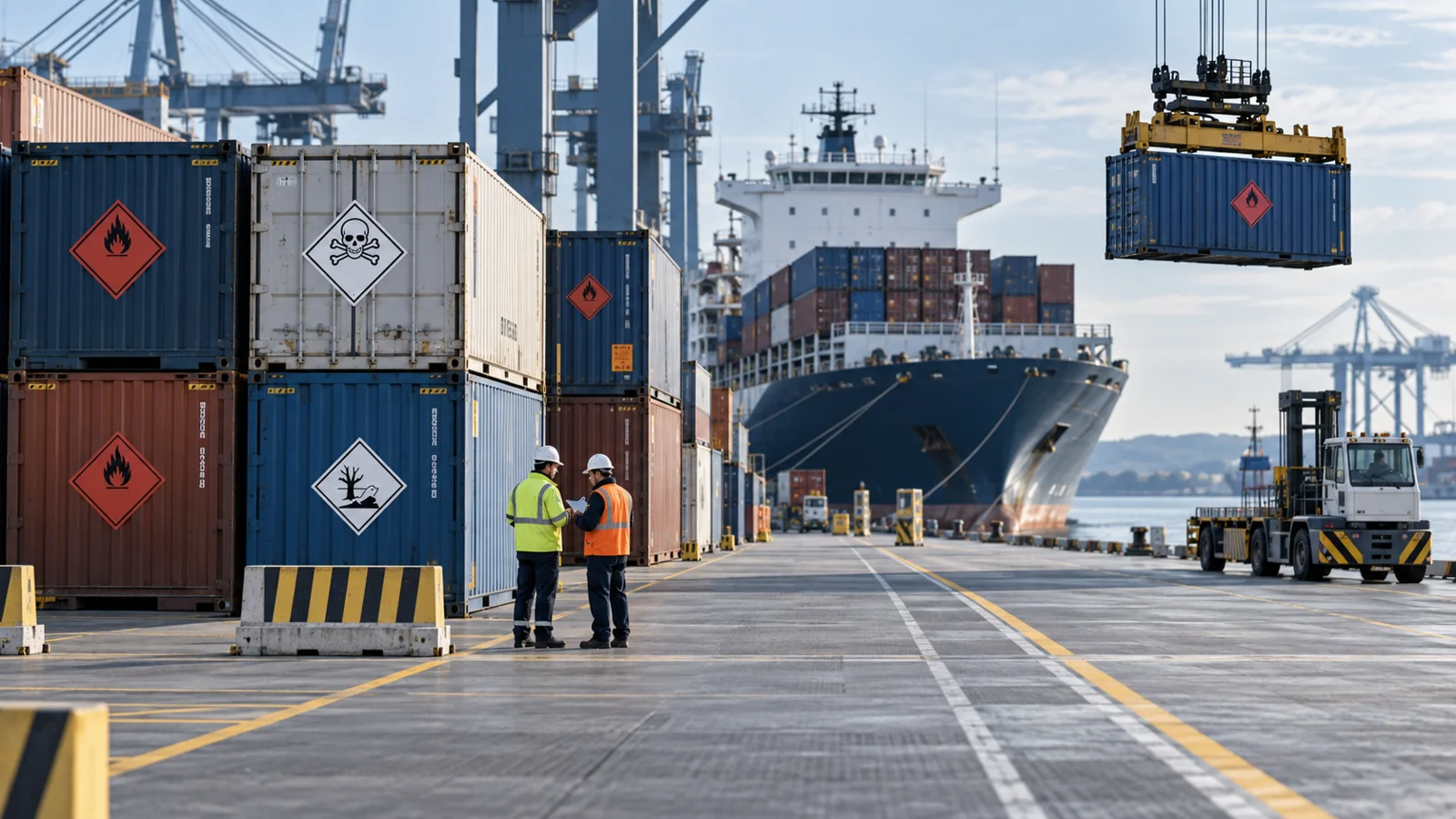
AI-generated editorial illustration.
What does IMDG Code Amendment 42-24 mean for a 2026 booking?
Use the current applicable IMDG requirements to classify, document, pack and offer dangerous goods for sea transport, and obtain the carrier's acceptance for the actual shipment. Amendment 42-24 is mandatory from 1 January 2026. An older booking template or a previous acceptance should not be assumed to establish compliance for a new consignment.
Start with the current code and competent people
IMO's IMDG Code publication page identifies the 2024 edition incorporating Amendment 42-24 and its mandatory date. Use the applicable consolidated text, corrections and competent dangerous-goods advice for the cargo; this article does not provide commodity-specific packing instructions.
A sales description may not contain enough information to classify a material for transport. Obtain the manufacturer's technical information and have the actual goods assessed by the responsible qualified personnel. A familiar trade name does not justify copying another product's declaration.
Check the booking data as one connected set
| Element | What should agree |
|---|---|
| Cargo identity | Actual product and technical information |
| Classification | Applicable transport classification and requirements |
| Packaging | Suitability, condition and required specifications |
| Declaration | Accurate description and required particulars |
| Packing record | The goods actually placed in the transport unit |
| Carrier acceptance | The route, equipment and cargo that were approved |
Check local and carrier requirements as well as the code. A technically prepared consignment can still need terminal acceptance, permits or additional information. Keep acceptance tied to the actual booking; it is not a transferable approval for every later shipment of a similarly named product.
A fictional document mismatch
A manufacturer changes a product formulation but the shipping department reuses an old dangerous-goods declaration. Before the booking is released, the discrepancy should be referred for proper reassessment. Altering the document's date without checking its substance does not solve the problem.
The useful control is a documented review whenever the product, packing, quantity or transport arrangement changes. Identify who can approve that review and who must be told. Keep superseded versions so the reason for a correction is traceable.
Keep insurance disclosure accurate
Describe the actual goods, hazards, packing and route when seeking cover. Insurance does not make an incorrectly declared or prohibited shipment acceptable for carriage. A later loss may require examination of policy conditions, disclosure, causation and applicable law; it should not be reduced to a promise that “all risks” pays for everything.
Read the unusual cargo quotation guide, explore cargo insurance information, and submit accurate cargo and handling details for assessment by the appropriate parties.
Key takeaways
- Use the current applicable code and corrections.
- Reassess changed goods rather than recycling old declarations.
- Keep classification, packing, booking and insurance descriptions aligned.
Frequently asked questions
What does IMDG Code Amendment 42-24 mean for a 2026 booking?
Use the current applicable IMDG requirements to classify, document, pack and offer dangerous goods for sea transport, and obtain the carrier's acceptance for the actual shipment. Amendment 42-24 is mandatory from 1 January 2026. An older booking template or a previous acceptance should not be assumed to establish compliance for a new consignment.
Sources & further reading
General information, not a coverage determination or offer. Actual cover is subject to policy wording, insurer terms, underwriting and applicable law.