
Used Car Shipping Insurance: Photograph Condition Before Collection
Record the vehicle's identity, agreed valuation, existing condition, collection point and complete transport arrangement before it moves.
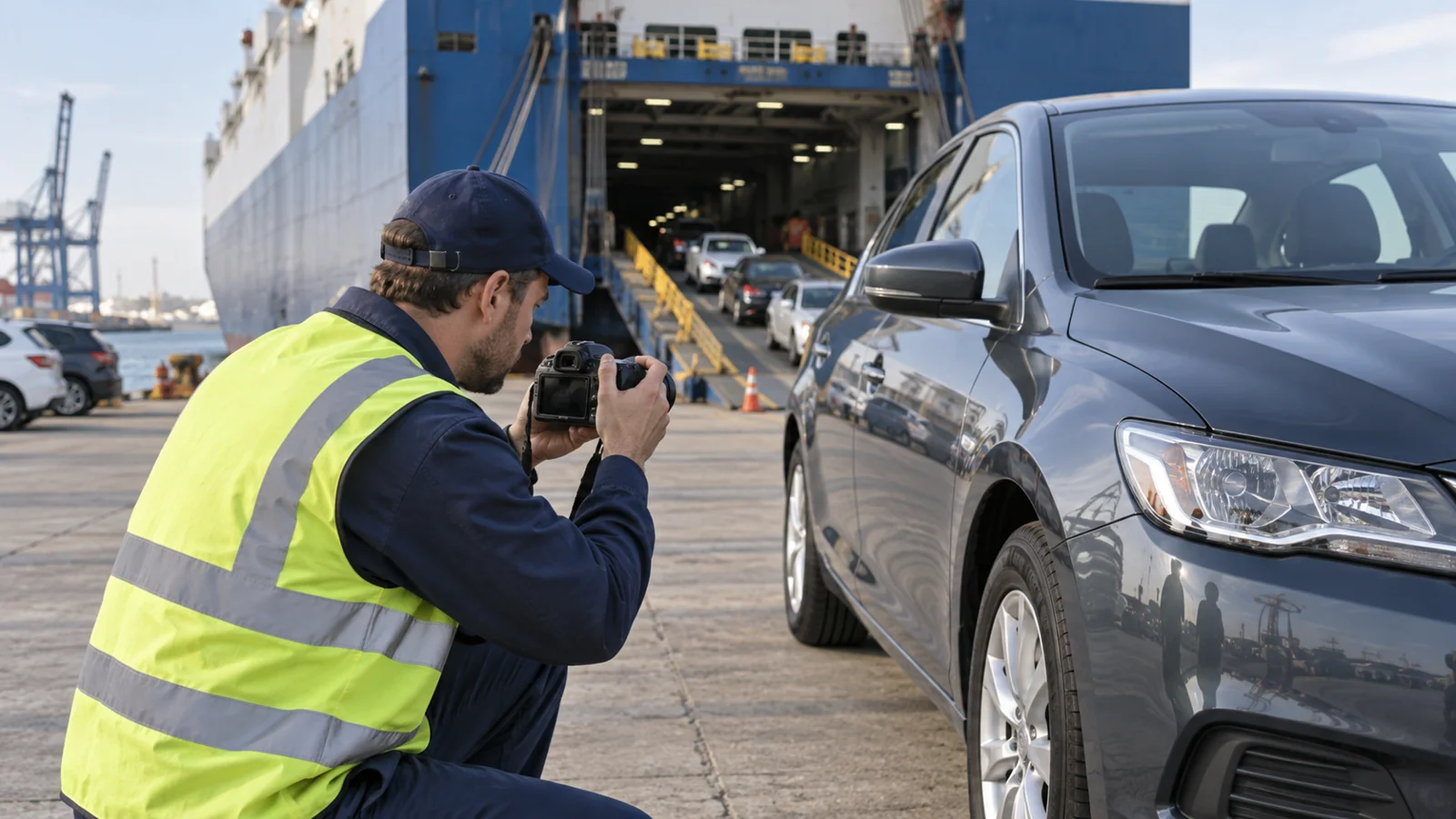
AI-generated editorial illustration.
What should used car shipping insurance record before collection?
Record the vehicle's identity, agreed valuation, existing condition, collection point and complete transport arrangement before it moves. Dated photographs and a signed condition report help distinguish old scratches or mechanical issues from alleged transit damage. Check the actual policy terms for loading, unloading, storage and exclusions rather than treating a carrier's booking confirmation as comprehensive insurance.
Establish who is arranging the journey
The Federal Maritime Commission's vehicle-shipping guidance is a useful starting point for US overseas shipments. Check the relevant provider, contract and jurisdiction for your own route. A door-to-port quote and a door-to-door arrangement may leave different inland and destination responsibilities.
Ask whether the car travels in a container or on a vehicle-carrying service, where it will be stored and who handles each transfer. Follow the carrier's specific preparation requirements. Electric vehicles and damaged vehicles can need different acceptance checks; avoid assuming one fuel or battery instruction suits every car.
| Before collection | Record to keep | Why it matters |
|---|---|---|
| Vehicle identity | VIN and registration details | Links evidence to the insured car |
| Exterior condition | Dated photographs from several angles | Identifies pre-existing marks |
| Interior and equipment | Inventory and condition report | Clarifies what was handed over |
| Value | Purchase and valuation evidence | Supports the agreed insured basis |
| Transport scope | Written route and handover locations | Exposes uninsured gaps |
Photograph the handover, not only the advertisement
A fictional buyer purchases a used coupe from an online listing. The listing photographs are six months old, while collection occurs after the car has spent weeks in a yard. On delivery, the buyer notices a dent. The advertisement alone cannot establish when it appeared. Collection and delivery reports, loading photographs and custody records provide a more useful chronology.
Record visible discrepancies promptly at delivery, using the carrier's procedure and the policy notification requirements. Do not sign a condition statement you know is inaccurate. Equally, avoid inventing a cause before the handling history has been investigated.
Ask about the losses that concern you
Mechanical breakdown, wear, personal effects left inside, accessories and diminution in value may receive different treatment from accidental physical damage. Check these expressly if they matter to the purchase. Agree the valuation and deductible before dispatch, and retain the insurance confirmation rather than relying on a sales conversation.
If damage is discovered, preserve evidence and obtain instructions before non-emergency repairs or disposal of parts. Reasonable mitigation and inspection arrangements should be coordinated with the relevant parties.
Read the container cargo guide, compare the scope of marine cargo insurance, or request assessment of your shipment.
Key takeaways
- Document the vehicle's condition at the actual collection handover.
- Confirm inland legs, storage and loading arrangements in writing.
- Check valuation and exclusions before dispatch, not after damage appears.
Frequently asked questions
What should used car shipping insurance record before collection?
Record the vehicle's identity, agreed valuation, existing condition, collection point and complete transport arrangement before it moves. Dated photographs and a signed condition report help distinguish old scratches or mechanical issues from alleged transit damage. Check the actual policy terms for loading, unloading, storage and exclusions rather than treating a carrier's booking confirmation as comprehensive insurance.
Sources & further reading
General information, not a coverage determination or offer. Actual cover is subject to policy wording, insurer terms, underwriting and applicable law.