
Container Cargo Insurance: Packing, Seals and Handover Evidence
Describe the goods, value, container type, packing and securing, route, custody changes and intended delivery point.
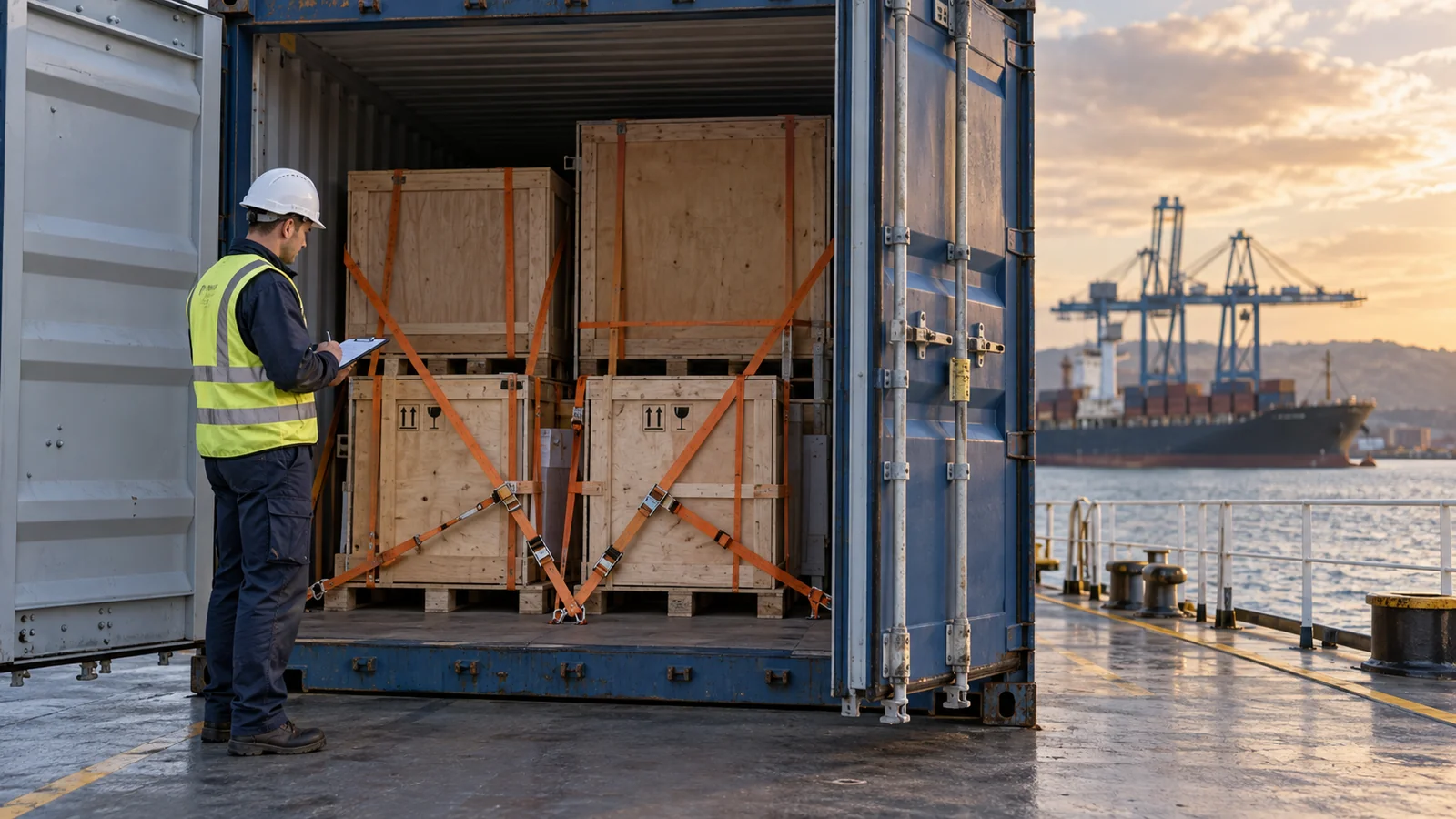
AI-generated editorial illustration.
A container seal provides one useful control, but it does not show how the cargo was packed or whether the goods were already damaged. Container cargo insurance works best with a record of the goods inside as well as the box outside.
What should a container cargo insurance enquiry describe?
Describe the goods, value, container type, packing and securing, route, custody changes and intended delivery point. Include temperature needs or dangerous-goods characteristics where relevant. Insurance covers the agreed cargo interest under its terms; it does not follow automatically from a booking, seal number or carrier's possession of the container.
Record packing before the doors close
Keep photographs of the empty container's apparent condition, the loading sequence, securing and the final stow. Use cargo-specific packing instructions and competent personnel. Record package counts and weights consistently with shipping documents.
| Record | What it helps establish |
|---|---|
| Empty-container inspection | Apparent suitability and visible defects |
| Packing photographs | Placement and restraint of goods |
| Seal log | Which seal was fitted, changed or found broken |
| Delivery exceptions | Condition at the first inspection opportunity |
The IMO/ILO/UNECE CTU Code is a recognised source of packing guidance. Insurance agreement does not replace safe packing, and compliance with guidance does not guarantee a claim will be paid.
Distinguish a seal discrepancy from a proven theft
In a fictional delivery, the seal differs from the dispatch record. The change may have a documented customs or terminal explanation, or it may need investigation. Preserve the original records and request the authorised change history. Do not immediately treat every mismatch as proof of theft or every intact seal as proof of undamaged cargo.
If goods are missing, reconcile packing count, weights, receipts and delivery tally. Record who opened the container and who attended. Keep photographs and packaging rather than relying on a later recollection.
Connect packing and valuation to the quote
For underwriting, provide commodity, invoice value, sale terms, container type, route, dates and maximum value in one container. Identify high-value theft targets, used machinery, fragile goods and any proposed deck or unusual carriage. Explain storage or transshipment that is not obvious from the port pair.
Ask how packing inadequacy, condensation, inherent characteristics, delay and unattended inland legs are treated. “All risks” is not a promise to cover poor preparation or every commercial consequence of late arrival. Check the exact clauses and any special conditions.
Act promptly after discovery
Notify the insurer and relevant transport providers, arrange inspection as directed and document reasonable mitigation. Preserve recovery rights and deadlines under the actual contracts. Avoid disposing of the container packaging or repairing goods before the evidence has been considered, except where necessary protective action cannot wait.
Read cargo cover fundamentals and cargo theft guidance. Ask about marine cargo insurance and submit a container shipment with the packing and handover plan.
Key takeaways
- Describe the goods, value, container type, packing and securing, route, custody changes and intended delivery point.
- No. Seal records help establish continuity, but packing, handling, moisture and the cargo's condition require their own evidence.
Frequently asked questions
What should a container cargo insurance enquiry describe?
Describe the goods, value, container type, packing and securing, route, custody changes and intended delivery point. Include temperature needs or dangerous-goods characteristics where relevant. Insurance covers the agreed cargo interest under its terms; it does not follow automatically from a booking, seal number or carrier's possession of the container.
Does an intact container seal prove there is no cargo damage?
No. Seal records help establish continuity, but packing, handling, moisture and the cargo's condition require their own evidence.
Sources & further reading
General information, not a coverage determination or offer. Actual cover is subject to policy wording, insurer terms, underwriting and applicable law.
Related reading
- Typhoon Shipping Delays: An Asia Cargo Continuity Checklist
- FCL vs LCL: Compare Cargo Handling, Consolidation and Claims Evidence
- Used Car Shipping Insurance: Photograph Condition Before Collection
- Marine Cargo Insurance: Coverage, Cost and Application Guide
- Shipping Insurance for Sellers: Who Arranges Cargo Cover?
- Explore marine insurance products