
Heavy Lift Cargo Insurance: Lift Plans and Survey Conditions
Heavy lift cargo insurance should reflect the item's dimensions, weight, centre of gravity, lifting points, handling sequence, route and declared value.
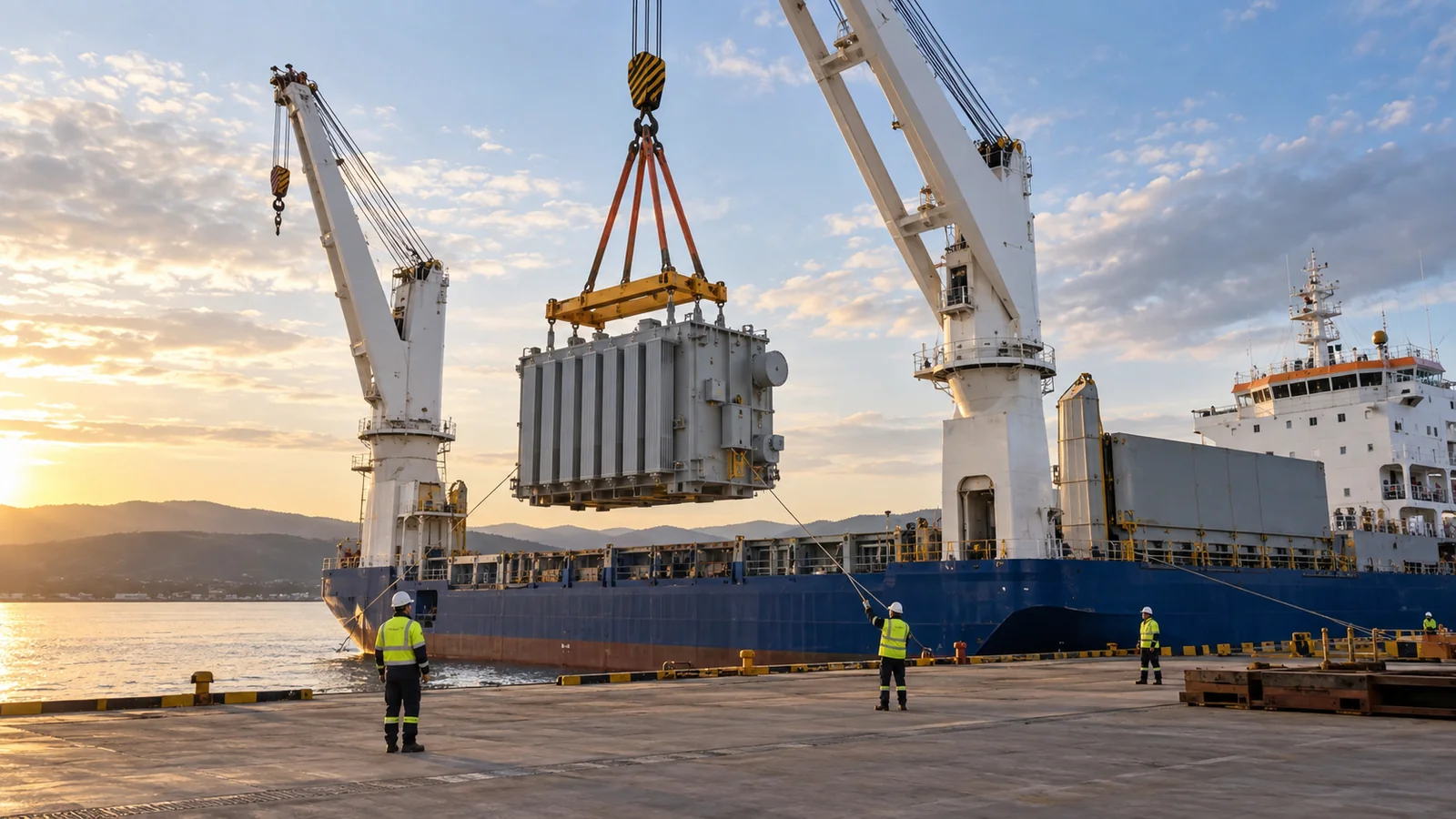
AI-generated editorial illustration.
A heavy-lift movement concentrates value into a short operation. The insurance enquiry should explain the lift and the transport chain, including who can approve changes when the planned equipment or route becomes unavailable.
What is important in heavy lift cargo insurance?
Heavy lift cargo insurance should reflect the item's dimensions, weight, centre of gravity, lifting points, handling sequence, route and declared value. Terms may require technical review or marine warranty surveys. A survey requirement is a condition to manage explicitly, not an assumption that every lift is insured or operationally approved.
Assemble a lift dossier
| Document | Decision it supports |
|---|---|
| Item drawing and transport specification | Identifies lifting and support requirements |
| Lift and securing plan | Explains how the operation will be performed |
| Route and berth assessment | Identifies physical constraints and handovers |
| Survey scope | Establishes which stages need attendance or approval |
| Change procedure | Names who must review a substituted crane or vessel |
Marsh's project cargo facility overview treats project cargo and delay exposure as specialist considerations. Its facility terms should not be assumed to apply to an unrelated heavy-lift enquiry.
A fictional crane substitution
A contractor proposes a different crane after the original becomes unavailable. The replacement may be suitable, but the existing insurance or survey agreement may refer to the original plan. Record the change and obtain the required technical and insurance responses before treating it as accepted.
Keep engineering approval distinct from insurance confirmation. An insurer's agreement does not certify lifting safety, and a technical approval does not necessarily satisfy every policy condition. The responsible lifting professionals retain their own duties.
Ask how value and delay are treated
An item's repair cost, replacement cost and project importance can be very different. Explain whether damage to one component would require replacing a larger assembly. Provide replacement lead times if delay cover is requested, while clearly separating that enquiry from physical cargo damage.
For underwriting, include item specifications, packing, condition, route, dates, contractors, storage and survey arrangements. Identify used equipment and any pre-existing defects. Avoid presenting the insured value as proof that the market will accept the requested limit.
Examine practical restrictions
Review lifting, securing, packing, mechanical derangement, testing, deck carriage and delay clauses. Ask which recommendations must be closed and whether a deviation requires written agreement. Do not rely on a certificate that omits the underlying survey conditions.
If damage occurs, prioritise safety, notify the insurer and preserve the lifting records, equipment data, photographs and contractor instructions. Seek advice before dismantling or destructive testing where practicable. Separate damage investigation from any admission of contractual liability.
Read high-value cargo considerations and cargo valuation. Explore high-value energy cargo enquiries and contact the team with the lift dossier before the operation is fixed.
Key takeaways
- Heavy lift cargo insurance should reflect the item's dimensions, weight, centre of gravity, lifting points, handling sequence, route and declared value.
- Not necessarily. Check any separate survey approval, notice, attendance or other conditions in the agreed cover before the lift.
Frequently asked questions
What is important in heavy lift cargo insurance?
Heavy lift cargo insurance should reflect the item's dimensions, weight, centre of gravity, lifting points, handling sequence, route and declared value. Terms may require technical review or marine warranty surveys. A survey requirement is a condition to manage explicitly, not an assumption that every lift is insured or operationally approved.
Does completing a lift plan satisfy every insurance condition?
Not necessarily. Check any separate survey approval, notice, attendance or other conditions in the agreed cover before the lift.
Sources & further reading
General information, not a coverage determination or offer. Actual cover is subject to policy wording, insurer terms, underwriting and applicable law.