
How Energy Cargo Insurance Protects High-Value Shipments
A guide to protecting energy commodities and project equipment, with attention to large values, handling, accumulation and project-delay exposure.
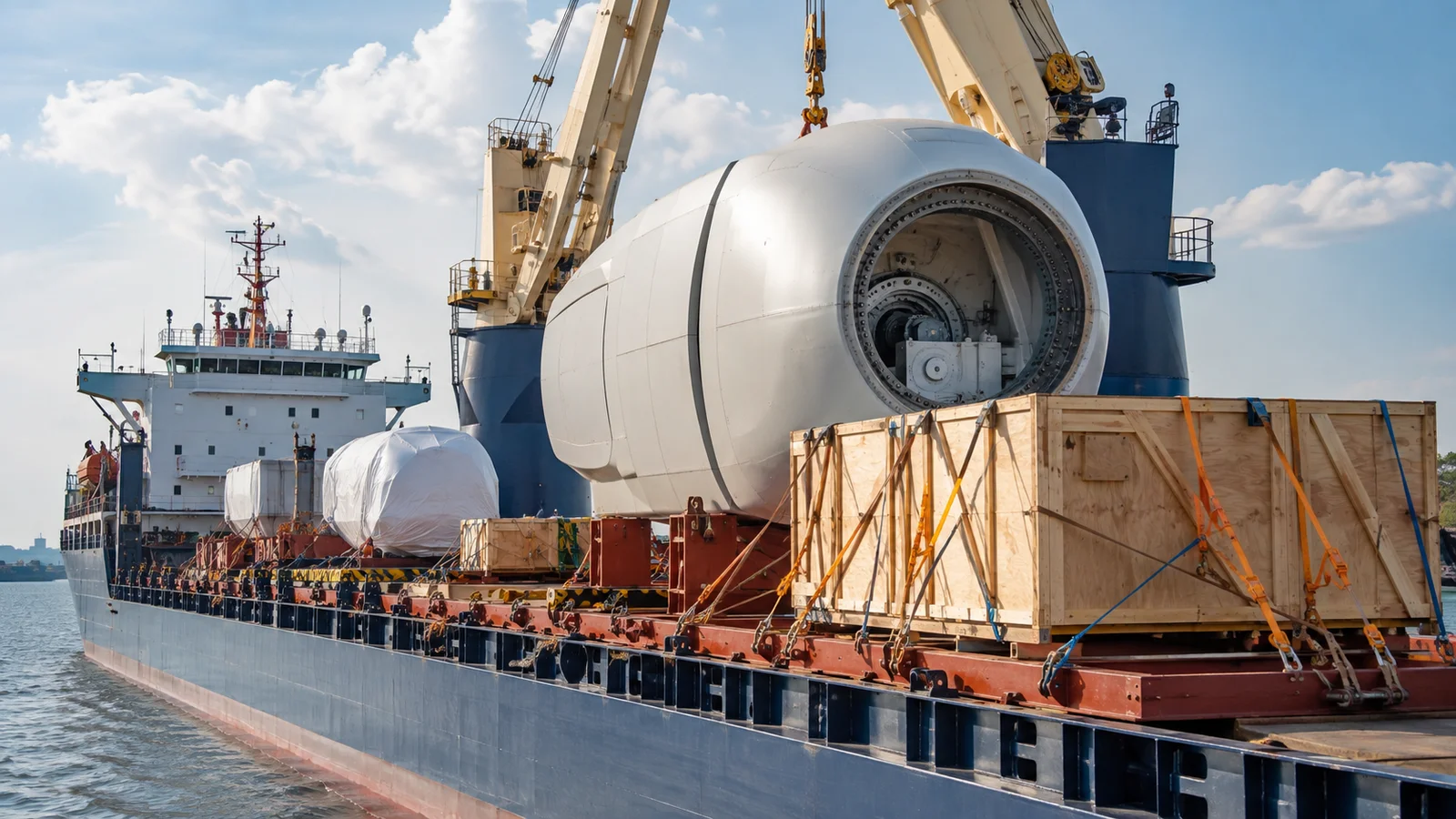
AI-generated editorial illustration.
> Editorial draft — pending specialist insurance and, where relevant, legal/compliance review. Updated 7 September 2026. Examples are hypothetical; the issued policy and applicable law determine actual cover.
Energy cargo can mean a crude oil parcel, gas-related equipment, a transformer, a turbine or other high-value material moving to an energy project. These shipments do not share one risk profile. Insurance should reflect the cargo’s physical characteristics, the journey and the financial consequence if it arrives damaged.
For project equipment, the replacement cost may be only part of the exposure. A damaged component can delay commissioning even when most of the project is complete. Commodity cargo brings different questions about quantity, quality, valuation and custody.
Separate commodities from project equipment
Begin with an accurate cargo schedule. Identify each item or parcel, its value, dimensions or quantity, handling requirements and intended use. For equipment, distinguish standard replaceable components from unique or long-lead items. For commodities, describe grade, measurement and storage arrangements.
A single policy may accommodate several categories only where the scope and limits are expressly agreed. Avoid grouping all energy shipments under a broad label that hides the most demanding movement. The largest or most critical item can determine the work needed for underwriting.
State the insured interest and sale terms. The ICC Academy’s explanation of CIP illustrates why the point of risk transfer can differ from the named destination to which transport and insurance are arranged. See ICC Academy: CPT and CIP under Incoterms 2020.
Map the route in operational detail
For heavy equipment, identify collection, inland route, port handling, lifts, sea fastening, discharge and final delivery. Include bridges, storage yards and transshipment where relevant. The ship leg may be only one part of the total exposure.
For bulk energy commodities, identify terminals, transfer points and any intermediate storage. Describe who has custody at each point and how quantity or quality is recorded. A route drawing should agree with the application and transport plan.
Changes to the logistics plan should trigger review under the policy’s terms. Replacing a lift method, vessel or storage location can alter the risk even when the destination remains the same.
Treat surveys as part of preparation
Critical cargo may require a marine warranty surveyor or other specialist oversight under the agreed contract. Establish the scope, approval stages and responsibility for closing recommendations before transport begins. An appointment alone does not demonstrate that required approvals have been obtained.
Allianz’s project cargo risk-consulting material describes specialist support for complex and out-of-gauge shipments. It illustrates the role of transport planning and survey work, rather than promising a particular insurance result. See Allianz Commercial: project cargo risk consulting.
Keep engineering calculations, lifting plans, packing specifications and acceptance records in a controlled file. The operational team should know which changes need renewed approval. This helps avoid an expensive shipment reaching the loading point with an unresolved condition.
Examine delay in start-up separately
Ordinary cargo cover focuses on the insured goods. Delay in start-up, often called DSU, is a distinct financial exposure associated with a project’s delayed operation following an agreed insured trigger. It is not a general guarantee that construction will finish on schedule.
The underwriting discussion may require the project schedule, critical path, replacement lead times, financial assumptions and alternative sourcing options. Munich Re’s project cargo and DSU material provides a primary industry reference for this specialist area. See Munich Re: marine project cargo and delay in start-up.
Ask which physical-damage policy must respond, how the waiting period works and how insured delay is separated from unrelated construction delay. The maximum indemnity period and financial limit should be supported by the actual project model.
Manage values and accumulation
Check the largest value on one conveyance and at one location. Several shipments can collect in a port or warehouse and create a larger exposure than the logistics team intended. A schedule based only on individual invoices may miss that accumulation.
For equipment, discuss freight, duties, replacement costs and any agreed uplift without double counting. For commodities, explain provisional pricing and when final declarations are available. The insurer needs to understand the valuation mechanism it is being asked to accept.
A high limit does not remove exclusions, deductibles or survey conditions. Compare the wording and operational requirements as carefully as the amount of capacity offered.
A hypothetical turbine shipment
A project imports a turbine with a long replacement lead time. During discharge, a handling incident damages a critical assembly. The cargo policy is examined for the physical damage, while any DSU policy requires analysis of the effect on the project’s planned start date.
The project team identifies available schedule float, the repair route, alternative components and other work that can continue. If unrelated civil works were already delayed, the financial claim must distinguish those days from delay caused by the turbine damage.
The hypothetical demonstrates why a project schedule is insurance evidence, not merely a planning chart. Updating it consistently before the incident helps establish what the project would have achieved without the damage.
Prepare the application with all stakeholders
Bring procurement, logistics, engineering, finance and insurance advisers into the same review. Agree the critical cargo list, route, values, survey obligations and claims contacts. Identify who can approve changes in packing, transport or delivery sequence.
Before movement, confirm that binding conditions are complete and relevant certificates match the actual shipment. Keep an arrival inspection and loss-notification procedure ready. For energy cargo, good preparation connects the insured goods to the business that depends on them, while keeping each coverage promise tied to its actual wording.
Frequently asked questions
Does ordinary cargo cover include project delay?
Usually this requires separate DSU or another expressly agreed extension. The policy must identify the insured trigger, financial interest and period of indemnity.
Why does an insurer ask for the project schedule?
It helps assess critical equipment, replacement time and the effect of damage on commissioning. It may also be important evidence for a later delay claim.
Can one programme cover oil and heavy machinery?
Possibly, but the insurer must accept both cargo categories, their routes, handling requirements and limits. A shared business sector does not make the risks identical.
Related reading and next step
Marine Cargo Insurance: Coverage, Cost and Application Guide; Marine Insurance for Crude Oil Cargo; Insurance Considerations for LNG and LPG Carriers.
Prepare a marine insurance enquiry with the relevant vessel, cargo and voyage details. Availability requires underwriting, compliance review and confirmed capacity. An enquiry, estimate or payment does not by itself establish cover.
Sources and editorial review
- Allianz Commercial: project cargo risk consulting
- Munich Re: marine project cargo and delay in start-up
- ICC Academy: CPT and CIP under Incoterms 2020
Prepared by the MarineEnergyCover editorial desk. No individual expert reviewer has yet approved this draft. Source references describe their own legal regimes or policy forms and do not establish MarineEnergyCover’s regulatory status, authority or available terms.
Frequently asked questions
Does ordinary cargo cover include project delay?
Usually this requires separate DSU or another expressly agreed extension. The policy must identify the insured trigger, financial interest and period of indemnity.
Why does an insurer ask for the project schedule?
It helps assess critical equipment, replacement time and the effect of damage on commissioning. It may also be important evidence for a later delay claim.
Can one programme cover oil and heavy machinery?
Possibly, but the insurer must accept both cargo categories, their routes, handling requirements and limits. A shared business sector does not make the risks identical.
Sources & further reading
- Allianz Commercial: project cargo risk consulting
- Munich Re: marine project cargo and delay in start-up
- ICC Academy: CPT and CIP under Incoterms 2020
General information, not a coverage determination or offer. Actual cover is subject to policy wording, insurer terms, underwriting and applicable law.
Related reading
- Project Cargo Insurance: Critical Items and Delay Exposure
- Heavy Lift Cargo Insurance: Lift Plans and Survey Conditions
- Offshore Wind Insurance: Installation, Cables and Repair Delays
- Marine Cargo Insurance: Coverage, Cost and Application Guide
- Marine Insurance for Crude Oil Cargo
- Insurance Considerations for LNG and LPG Carriers
- Explore marine insurance products