
How Marine Insurance Responds to Grounding Risks
Understand the different insurance interests a grounding can affect and the information needed for coordinated claims review.
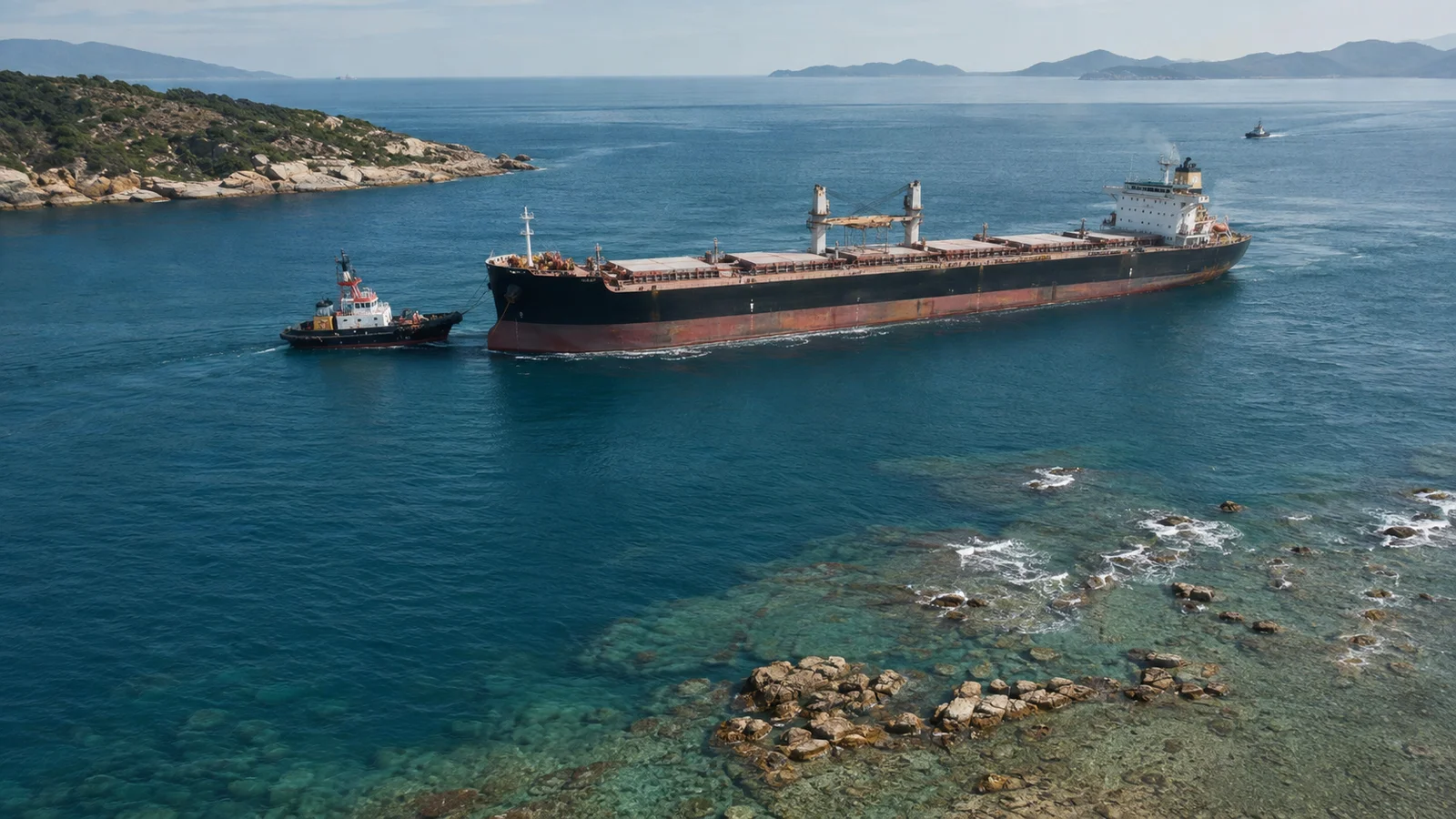
AI-generated editorial illustration.
A grounding can create more than damage to the bottom of a ship. Depending on the event, it can involve salvage, pollution, cargo interests, liabilities, repair costs and interrupted trading. Each consequence needs to be considered under the relevant insurance contract rather than grouped into a single assumption that “grounding is covered.”
This article explains the insurance questions and preparation of a claim record. It is not guidance on refloating, vessel stability, navigation or emergency response. Those decisions require the master, operator, competent authorities and qualified specialists using the actual circumstances.
Separate the insured interests
The vessel owner may look to hull insurance for physical damage within its terms. Liability interests, cargo damage and income interruption can involve other policies. Some expenses may require specific analysis of their purpose and the applicable wording.
Create a list of affected interests and identify the actual provider and claims contact for each. The same incident can produce several related files without giving the insured multiple recoveries for the same loss. Coordination is important because the evidence may be shared while policy questions differ.
Do not infer the response from a certificate alone. Obtain the schedule, wording and endorsements, including geographical provisions and any relevant deductibles or conditions.
Understand how nearby property can change the questions
A grounding may occur near a quay, pipeline, cable or other property. Damage to the vessel and liability for damage to that property are distinct issues. Their allocation between hull and P&I depends on the actual arrangements.
As a specific provider example, Gard: Rule 37, Damage to fixed or floating objects explains how certain fixed- or floating-object liabilities interact with hull cover and the club’s rule. It demonstrates the need to examine the interface; it is not a statement that every P&I policy has the same terms or pays a hull deductible.
If another party asserts a claim, preserve the correspondence and refer it promptly to the responsible claims contact. Avoid agreeing the cause, fault or value without appropriate advice.
Record the event and the response accurately
Prepare a chronology with vessel identity, location, times, reported conditions and actions taken. Identify which information is confirmed and which is preliminary. Preserve relevant records through the professional response process without compromising safety.
The claims team may need logs, voyage information, survey findings, photographs, communications and details of damage. Provide the records requested by the appointed specialists and retain original versions. A later reconstruction should distinguish contemporaneous evidence from subsequent opinion.
Record who instructed urgent work and why. Separate emergency actions from later commercial repair decisions. This helps reviewers understand the purpose of expenditure and the sequence of events.
A fictional soft-grounding scenario
A vessel touches bottom during a port approach and later reaches a safe berth under professional direction. Initial inspection does not establish the full extent of damage. The commercial team is concerned about both repair costs and missed employment.
The insurance file should not jump from “no visible damage” to “no claim,” or from “grounding” to “all costs insured.” The owner should notify the relevant contacts under the policy requirements and follow the appointed survey process. Technical findings, repair requirements and the terms of any income-related cover need separate assessment.
This example shows why early assumptions can be unreliable. It does not suggest what action the master should take in a real casualty or predict whether any loss will be recoverable.
Examine repair and time-related costs separately
A repair estimate can include casualty work, planned maintenance and improvements. Keep those categories clear so that the surveyor and adjuster can examine them. Combining all yard expenditure into a single claim total obscures the purpose of each item.
Lost earnings or off-hire consequences require their own contractual review. The fact that hull damage is insured does not establish that every day out of service is recoverable under another policy. Waiting periods, insured triggers and limits may differ.
Maintain invoices, work scopes, schedules and explanations for changes. Where temporary repairs or movement to another yard are proposed, ask the actual claims team about the approval process and documentation required.
Use incident learning in future underwriting
Once the event is investigated, summarize the findings relevant to the business and the corrective actions actually completed. Avoid presenting an unfinished investigation as a final cause determination. Technical, regulatory and insurance findings may answer different questions.
For future applications or renewal, disclose the incident in accordance with the relevant questions and duties. Include current loss figures and explain any remaining uncertainty. Evidence of a completed improvement is more useful than a generic statement that the problem cannot recur.
Keep the claims record connected to the correct policy period and certificate version. Report through the claims page where appropriate, while following the actual insurer’s instructions and any required authority notifications. Insurance assessment should support a factual, coordinated process rather than replace the professional casualty response.
Frequently asked questions
Does hull insurance automatically cover every grounding expense?
No. The policy, cause, type of expense and other terms must be examined. Physical repairs, liabilities, salvage-related costs and income losses can involve different provisions or policies.
Should a minor grounding be reported if damage is uncertain?
Follow the actual policy’s notification requirements and obtain guidance from the responsible claims contact. Initial uncertainty about damage is not a reliable basis for assuming that no notification is needed.
Will P&I pay whatever hull insurance does not?
Do not assume that. P&I has its own rules, exclusions and relationship with hull cover. Gaps and deductibles need specific review rather than an expectation of automatic top-up protection.
Related reading
- What to do after a marine loss or incident
- Vessel collision risk and marine insurance
- How claims history affects marine insurance pricing
Sources and editorial review
Prepared by the MarineEnergyCover editorial desk. Updated 7 September 2026. Expert and, where relevant, compliance review are pending; no reviewer has been appointed. Examples are fictional and explain questions to investigate, not coverage decisions. Sources provide general context and do not describe MarineEnergyCover’s capacity, authority or policy terms. Insurance availability remains subject to underwriting, applicable law and the agreed contract.
Frequently asked questions
Does hull insurance automatically cover every grounding expense?
No. The policy, cause, type of expense and other terms must be examined. Physical repairs, liabilities, salvage-related costs and income losses can involve different provisions or policies.
Should a minor grounding be reported if damage is uncertain?
Follow the actual policy’s notification requirements and obtain guidance from the responsible claims contact. Initial uncertainty about damage is not a reliable basis for assuming that no notification is needed.
Will P&I pay whatever hull insurance does not?
Do not assume that. P&I has its own rules, exclusions and relationship with hull cover. Gaps and deductibles need specific review rather than an expectation of automatic top-up protection.
Sources & further reading
General information, not a coverage determination or offer. Actual cover is subject to policy wording, insurer terms, underwriting and applicable law.