
Insurance Requirements for Oil Tankers
Separate legal financial-security duties, charter requirements and commercial insurance choices when preparing an oil tanker programme.
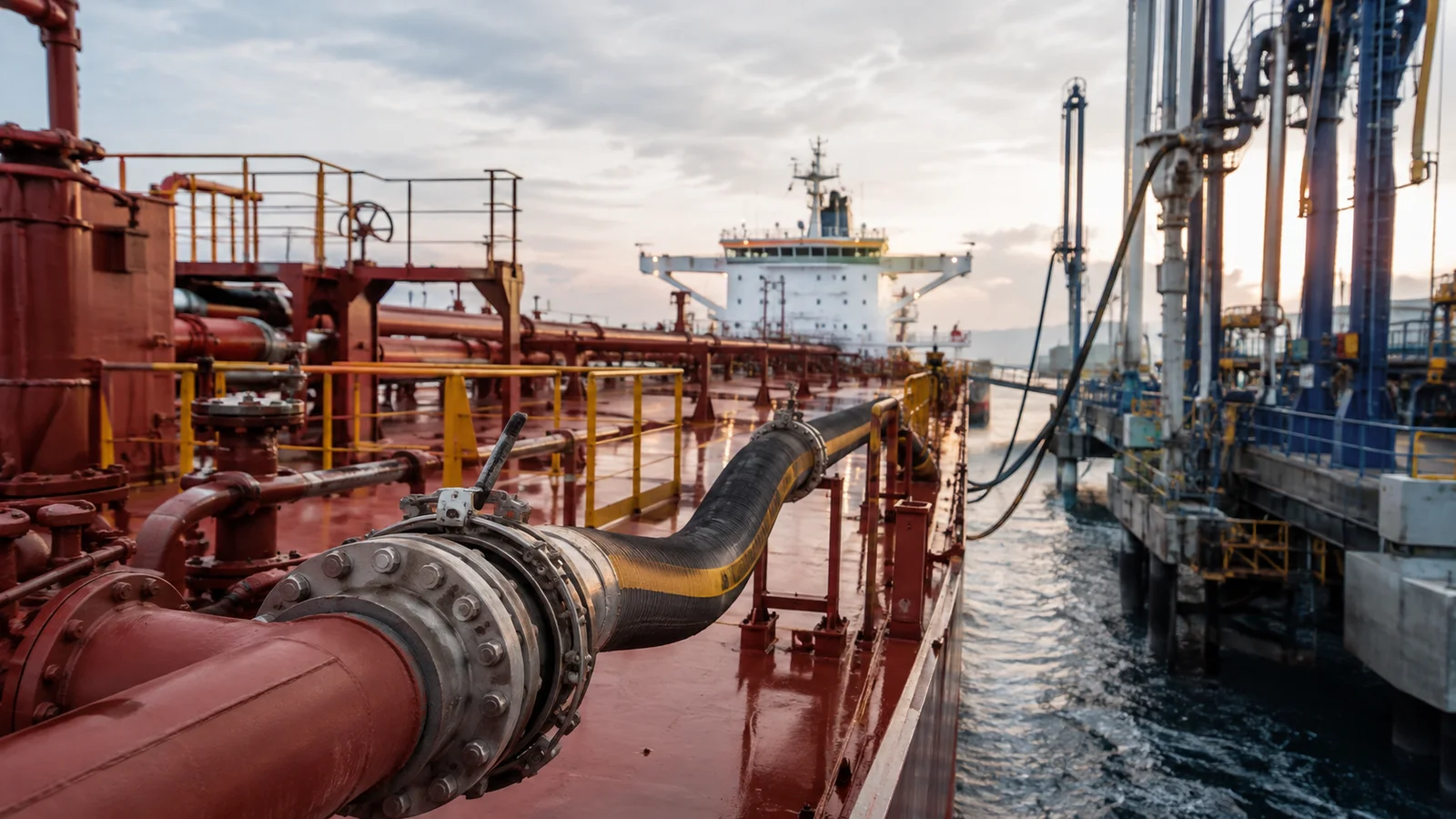
AI-generated editorial illustration.
> Editorial draft — pending specialist insurance and, where relevant, legal/compliance review. Updated 7 September 2026. Examples are hypothetical; the issued policy and applicable law determine actual cover.
Insurance requirements for an oil tanker come from several places: applicable law, flag and port requirements, financing documents, charterparties and the owner’s own risk decisions. A vessel can meet one requirement while leaving another unresolved. The useful starting point is a requirements register that identifies the source, document and responsible person for each obligation.
This guide distinguishes those layers without presenting a universal legal checklist for every tanker. Tonnage, cargo, flag, trading and the relevant jurisdiction must be checked for the actual vessel.
Separate compulsory security from commercial cover
Hull insurance is primarily a commercial protection for the vessel interest, although lenders and charterers may require it contractually. P&I addresses specified liabilities. Some liability regimes also require financial security and an authority-issued certificate. These instruments serve related but different purposes.
The 1992 Civil Liability regime addresses pollution damage involving persistent oil within its scope. The insurance requirement includes relevant ships carrying more than 2,000 tonnes of oil in bulk as cargo. Application to a particular ship and voyage requires examination of the convention and implementing law. See IMO Civil Liability Convention and 1992 Protocol.
Bunker pollution has its own convention framework, with compulsory security requirements for ships over 1,000 gross tonnage within its scope. The relationship between regimes needs legal attention; the same event should not be casually assigned to whichever certificate is easiest to find. See IMO Bunker Oil Pollution Damage Convention.
Create a vessel-specific document matrix
For each applicable obligation, record the legal or contractual basis, issuer, insured party, vessel identification, limit, effective date and expiry. Include any authority certificate and the insurer evidence supporting it. Add the location of the authoritative document and the person responsible for renewal.
Check the name and IMO number across all records. If a vessel changes ownership or flag, ask which certificates must be reissued and when the new insurance takes effect. A valid document for the former owner does not automatically satisfy the new owner’s obligations.
Keep commercial certificates distinct from convention certificates, class certificates and evidence of regulatory authorisation. A professional-looking PDF should be verified by its issuing source and legal function, not by appearance.
Meet lender and charterparty requirements
A financing agreement may specify insured values, acceptable insurers, loss-payable clauses and notice provisions. A charterparty may require particular liability limits, certificates or additional war arrangements. Review the exact wording and any amendments before assuming the standard annual programme is sufficient.
Identify which party pays additional premiums and who must request approval for special trading. Commercial reimbursement and insurer acceptance are separate issues. If the charterer agrees to pay, the owner still needs the relevant cover to be available and properly bound.
Ask the counterparty to confirm acceptance of the final evidence where the contract requires it. This is especially useful when the policy structure or issuing entity differs from what the contract originally anticipated.
Demonstrate tanker condition and control
Underwriters need class status, survey history, maintenance evidence and the vessel’s operating profile. Oil tanker hull surveys can involve enhanced inspection requirements; the IMO publishes amendments to the ESP framework, including changes affecting thickness-measurement firms. The applicable consolidated requirements should be checked with the technical adviser and class society. See IMO: shipping-rule amendments in force from January 2026.
Relevant vetting and inspection reports can provide additional operational evidence. OCIMF’s SIRE inspection process is separate from insurance acceptance and from statutory certification. Provide the report date and completed corrective actions where such reports are relevant to the enquiry. See OCIMF: requesting a SIRE 2.0 inspection.
Describe cargo systems, terminal operations, transfer activities and management responsibilities. An underwriter should be able to understand the proposed trading without guessing from the vessel type alone.
Check pollution and casualty response arrangements
Identify the insurer’s notification route, local response arrangements and authority to engage experts. The operator should know who can coordinate pollution advice, survey attendance and potential financial security. Keep an updated emergency contact sheet aboard and ashore.
Review contractual liability for terminal operations, towage, salvage-related services and transfers. A broad indemnity can create obligations beyond the ordinary legal position. Obtain the appropriate policy advice before agreeing unusual terms.
Preserve operating records systematically. Tank measurements, cargo documentation, bunker records, communications and response expenditure may all become relevant after an incident. A claims file assembled from reliable daily records is more useful than one reconstructed weeks later.
A hypothetical acquisition handover
An owner buys an oil tanker and plans immediate trading after delivery. The purchase team has a hull quote, but the new flag documents, P&I entry and authority certificates are being handled by different people. The risk is an unrecognised gap at the moment responsibility transfers.
The owner creates a handover schedule showing delivery time, transfer of possession, policy inception, required certificate issuance and lender approval. Outstanding conditions are tracked individually. The ship does not rely on the seller’s document folder as proof of the buyer’s cover.
This hypothetical highlights a common coordination problem rather than a particular legal outcome. The parties should obtain advice on the purchase terms and the actual certificate requirements well before delivery.
Maintain the register throughout the year
Review the register after changes in ownership, flag, management, cargo or trading. Set reminders early enough for authority processing and insurer review. Verify current requirements at renewal rather than copying last year’s checklist unchanged.
The result should be a coherent set of legal security, contractual evidence and commercial protection. Each item needs an identified source and a responsible owner; no single document should be expected to perform every function.
Frequently asked questions
Is P&I entry the same as a convention certificate?
No. Insurer evidence may support the authority’s certificate process, but the documents have different issuers and legal functions.
Are requirements identical for every oil tanker?
No. Cargo, tonnage, flag, trading and the applicable legal regime affect the assessment. Contractual requirements can add further obligations.
Can the buyer use the seller’s insurance after delivery?
Only if a legally effective arrangement expressly provides for it. New ownership and delivery timing should be coordinated with authorised insurers and relevant authorities.
Related reading and next step
Tanker Insurance: Cover for Oil, Product and Chemical Tankers; Marine Pollution Liability Insurance Explained; Documents Commonly Required for Vessel Insurance.
Prepare a marine insurance enquiry with the relevant vessel, cargo and voyage details. Availability requires underwriting, compliance review and confirmed capacity. An enquiry, estimate or payment does not by itself establish cover.
Sources and editorial review
- IMO Civil Liability Convention and 1992 Protocol
- IMO Bunker Oil Pollution Damage Convention
- IMO: shipping-rule amendments in force from January 2026
- OCIMF: requesting a SIRE 2.0 inspection
Prepared by the MarineEnergyCover editorial desk. No individual expert reviewer has yet approved this draft. Source references describe their own legal regimes or policy forms and do not establish MarineEnergyCover’s regulatory status, authority or available terms.
Frequently asked questions
Is P&I entry the same as a convention certificate?
No. Insurer evidence may support the authority’s certificate process, but the documents have different issuers and legal functions.
Are requirements identical for every oil tanker?
No. Cargo, tonnage, flag, trading and the applicable legal regime affect the assessment. Contractual requirements can add further obligations.
Can the buyer use the seller’s insurance after delivery?
Only if a legally effective arrangement expressly provides for it. New ownership and delivery timing should be coordinated with authorised insurers and relevant authorities.
Sources & further reading
- IMO Civil Liability Convention and 1992 Protocol
- IMO Bunker Oil Pollution Damage Convention
- IMO: shipping-rule amendments in force from January 2026
- OCIMF: requesting a SIRE 2.0 inspection
General information, not a coverage determination or offer. Actual cover is subject to policy wording, insurer terms, underwriting and applicable law.