
Marine Pollution Liability Insurance Explained
A practical guide to identifying marine pollution liabilities, applicable financial-security regimes and the evidence needed after an incident.
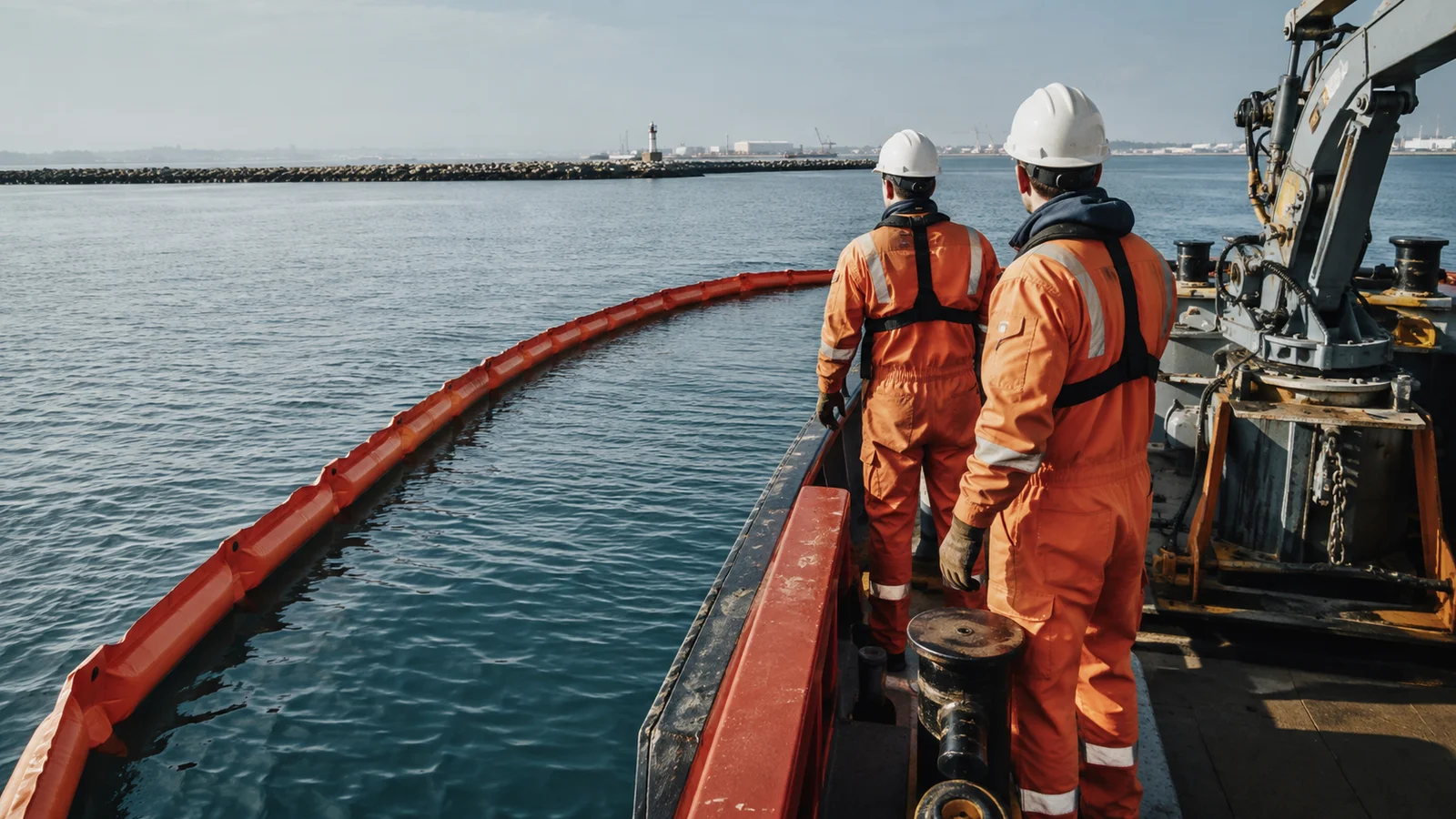
AI-generated editorial illustration.
> Editorial draft — pending specialist insurance and, where relevant, legal/compliance review. Updated 7 September 2026. Examples are hypothetical; the issued policy and applicable law determine actual cover.
Marine pollution liability insurance addresses the insured’s legal responsibilities following the release or threatened release of pollutants within the policy’s scope. It is different from insurance for the vessel or cargo that was damaged. A pollution event can affect coastlines, property, businesses and response costs beyond the ship itself.
The correct insurance analysis starts with the substance, source, vessel, location and applicable law. Oil carried as cargo, bunker fuel and other hazardous substances can engage different legal frameworks. This guide is a preparation framework, not a determination of liability for a particular incident.
Identify the source and legal regime
Record whether the substance is cargo, fuel or another material, and identify the ship and operation involved. The relevant rules can depend on the type of oil, vessel, trading location and states whose laws apply. Do not select a regime solely because the vessel is described as a tanker.
The IMO publishes summaries of the Civil Liability, Bunkers and other liability-and-compensation conventions. These sources are useful starting points, but current treaty participation, entry into force and national implementation require verification for the case. See IMO Civil Liability Convention and 1992 Protocol, IMO Bunker Oil Pollution Damage Convention and IMO liability and compensation conventions.
Avoid applying a single convention limit to every pollution event. Limits, defences, direct-action rights and the ability to limit liability depend on the relevant framework and facts. Specialist legal advice is necessary when those questions arise.
Understand the insured interest
P&I or another pollution liability arrangement may address specified claims against the insured. Cargo insurance may address physical loss of the oil itself. Hull insurance may address damage to the ship. These interests can coexist without producing identical coverage.
Ask which insured entity bears the relevant liability: registered owner, operator, charterer or another party. Contracts can allocate responsibilities internally, but they may not change rights held by third-party claimants under law. The policy must be reviewed alongside both legal and contractual obligations.
Check limits, deductibles, exclusions and treatment of preventive measures, clean-up, property damage and economic claims. Fines and penalties need particular attention to applicable law and wording rather than a blanket statement that they are insured.
Distinguish insurance evidence from authority certificates
Where compulsory financial security applies, the relevant certificate process must be completed with the appropriate authority. An insurer’s undertaking or blue card may support that process, but it has a different role from the authority-issued certificate.
Maintain a register showing vessel identity, applicable regime, financial-security provider, certificate issuer and expiry. Confirm acceptance with the flag or relevant authority. A commercial platform’s certificate verification confirms only what the platform’s record is designed to verify; it does not itself establish compliance with every convention.
For acquisitions, flag changes or new trading, review the documentation before the change takes effect. The legal and insurance teams should agree who is responsible for each step.
Prepare response arrangements in advance
Keep current emergency contacts, response plans and clear authority to notify insurers and appropriate public authorities. Operational priorities are life, safety, lawful reporting and limiting damage. Insurance coordination should support those priorities rather than delay necessary action.
Identify who can engage technical experts, legal advisers and response contractors under the policy’s process. Record decisions and expenditure from the beginning. Where urgent action is necessary, preserve the reasons and communications so later reviewers can understand the circumstances.
The IMO’s Bunkers Convention claims manual provides practical guidance on presenting and assessing pollution claims within that regime. It is guidance rather than a substitute for the law. See IMO Bunkers Convention claims manual.
Preserve evidence without guessing the outcome
Document the time, location, substance, estimated quantity and observed source, clearly distinguishing confirmed facts from estimates. Preserve logs, photographs, samples, transfer records, weather information and communications. Use qualified specialists for sampling and technical analysis.
For response expenditure, retain contractor instructions, daily activity records, personnel and equipment logs, invoices and proof of payment. A total invoice without an explanation of the work may be difficult to assess. Also record why particular measures were taken and what alternatives were considered.
Do not assume that every claimed economic loss is recoverable or that every environmental expenditure will be reimbursed. The legal criteria, causation, reasonableness and policy terms must be assessed on the evidence.
A hypothetical bunkering spill
A vessel experiences a spill during bunkering at a terminal. The operator activates its response procedure, notifies the appropriate parties and records the operation. The immediate factual file includes the bunker plan, communications, transfer rates, valve information and the actions taken to contain the release.
The claims review then separates lost fuel, damage to the ship, terminal claims, clean-up expenses and any regulatory proceedings. The bunker supplier’s and vessel’s contracts may also be relevant. None of these items is assumed to have the same liability or insurance treatment.
The hypothetical shows why a coordinated response needs separate accounting categories. Good records help the insurer and legal team evaluate each item without losing the common incident chronology.
Review the programme against actual operations
At renewal, consider cargo changes, transfer operations, new ports and contractual indemnities. Check financial-security requirements with current authoritative sources. Explain prior incidents and the corrective action completed.
The objective is a programme that connects legal obligations, credible response arrangements and understood insurance terms. A high headline limit is useful only when the relevant liability, insured party and operation fall within the accepted cover.
Frequently asked questions
Does hull insurance cover pollution claims?
Hull and pollution liabilities are different interests. Some associated costs may be allocated under particular wordings, but the full programme must identify the relevant liability cover.
Are all clean-up costs recoverable?
No. Legal criteria, reasonableness, causation and policy terms affect recovery. Preserve detailed records of the measures and their purpose.
Does a commercial certificate satisfy compulsory security rules?
Not necessarily. The relevant authority’s requirements and certificate process must be followed for the applicable regime.
Related reading and next step
Protection & Indemnity Insurance Explained; Insurance Requirements for Oil Tankers; Marine Insurance for Crude Oil Cargo.
Prepare a marine insurance enquiry with the relevant vessel, cargo and voyage details. Availability requires underwriting, compliance review and confirmed capacity. An enquiry, estimate or payment does not by itself establish cover.
Sources and editorial review
- IMO Civil Liability Convention and 1992 Protocol
- IMO Bunker Oil Pollution Damage Convention
- IMO liability and compensation conventions
- IMO Bunkers Convention claims manual
Prepared by the MarineEnergyCover editorial desk. No individual expert reviewer has yet approved this draft. Source references describe their own legal regimes or policy forms and do not establish MarineEnergyCover’s regulatory status, authority or available terms.
Frequently asked questions
Does hull insurance cover pollution claims?
Hull and pollution liabilities are different interests. Some associated costs may be allocated under particular wordings, but the full programme must identify the relevant liability cover.
Are all clean-up costs recoverable?
No. Legal criteria, reasonableness, causation and policy terms affect recovery. Preserve detailed records of the measures and their purpose.
Does a commercial certificate satisfy compulsory security rules?
Not necessarily. The relevant authority’s requirements and certificate process must be followed for the applicable regime.
Sources & further reading
- IMO Civil Liability Convention and 1992 Protocol
- IMO Bunker Oil Pollution Damage Convention
- IMO liability and compensation conventions
- IMO Bunkers Convention claims manual
General information, not a coverage determination or offer. Actual cover is subject to policy wording, insurer terms, underwriting and applicable law.