
Typhoon Shipping Delays: An Asia Cargo Continuity Checklist
Use current official weather and port instructions alongside the carrier's shipment notice, then review cargo readiness, terminal cut-offs, storage and onward connections.
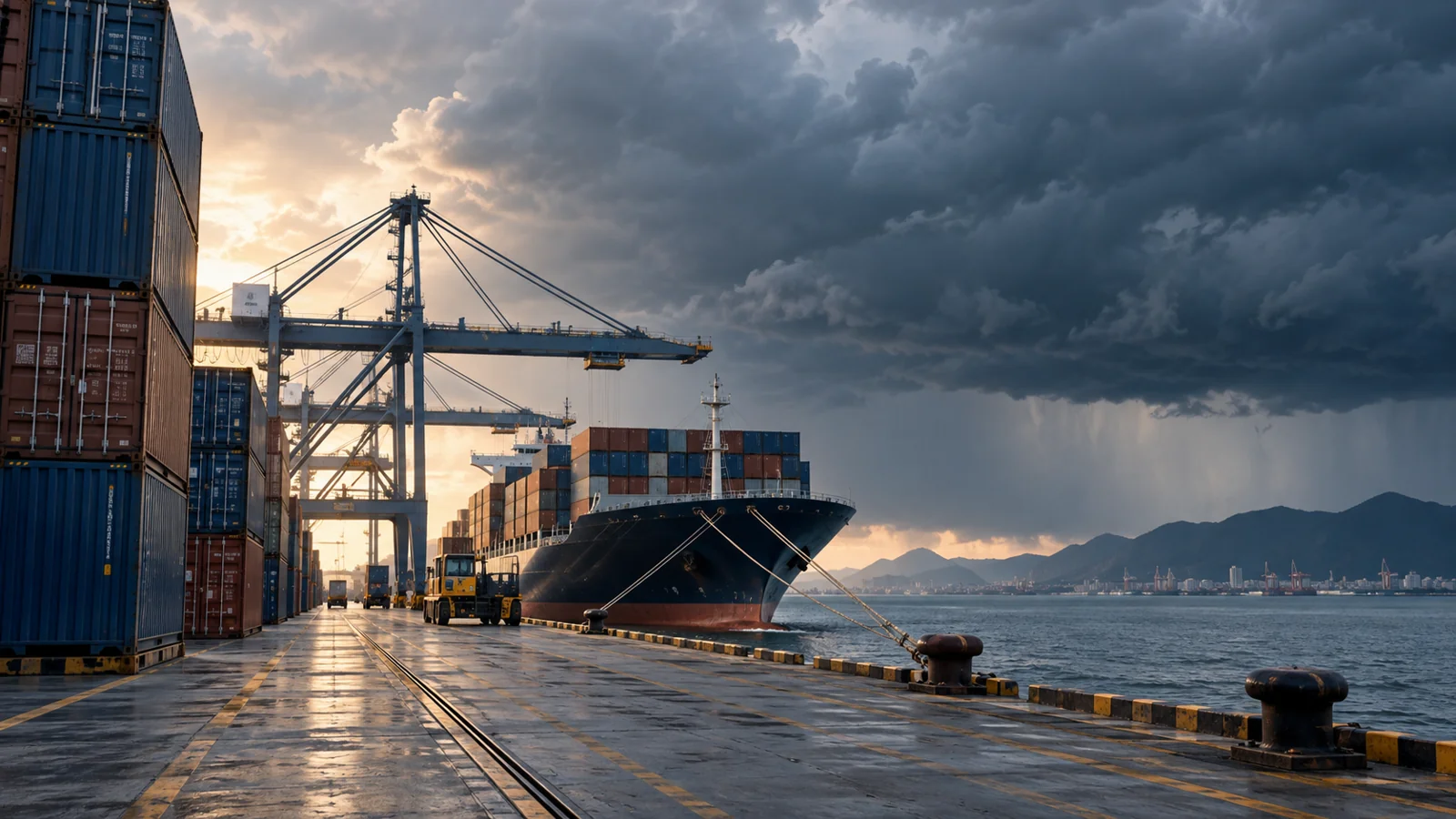
AI-generated editorial illustration.
How should Asian shippers prepare for typhoon-related delays?
Use current official weather and port instructions alongside the carrier's shipment notice, then review cargo readiness, terminal cut-offs, storage and onward connections. Avoid treating a forecast as a guaranteed sailing delay or a carrier estimate as a safety instruction. Insurance questions should address the actual cargo, protective arrangements and any changed journey.
A current planning context
Maersk issued an East Asia typhoon-season shipping update on 9 September 2026. This guide uses that notice as a dated operational reference; it does not publish a live storm forecast, port closure list or predicted reopening time.
Weather can affect several stages at different times. A factory may be ready while trucking is interrupted, or a terminal may resume operations while the next vessel is still delayed elsewhere. Ask for the next confirmed event in the shipment's own chain instead of extrapolating from a regional headline.
Work through the handovers
| Stage | Preparation question |
|---|---|
| Factory release | Can goods remain suitably protected if collection changes? |
| Inland collection | Are revised access and cut-off instructions confirmed? |
| Terminal custody | What arrangements apply while movement is interrupted? |
| Reefer cargo | Who monitors power and temperature status? |
| Onward connection | Has the next booking been reconfirmed? |
Follow instructions from the responsible authorities and operators. Do not send staff to inspect inaccessible or unsafe cargo simply to obtain photographs for an insurance file. Record why access was unavailable and arrange appropriate inspection when it can be conducted safely.
A fictional rescheduling decision
An exporter has packed humidity-sensitive machinery but its truck appointment is cancelled. The goods can remain in a controlled warehouse or be moved to an outdoor staging area for a possible earlier collection. The business should consider protection and handling, not just the prospect of saving a day.
If the cargo stays at origin longer than expected, confirm its storage conditions and the point at which insurance attaches. If already in transit, review any additional storage and amended routing. The fact that a delay is weather-related does not determine every policy question.
Keep useful records without premature conclusions
Preserve dated closure or access notices, booking changes, packing records and any condition or temperature information. If water damage is later discovered, distinguish rain exposure, condensation, flooding and other possible causes through appropriate evidence. The existence of a typhoon in the region is context, not proof of a particular damage mechanism.
Use the container packing and handover guide and cargo insurance information. Submit the cargo's requirements and revised journey before assuming that changed storage or transport is accepted.
Key takeaways
- Follow current authority and operator instructions.
- Track each handover rather than only the vessel's delay.
- Preserve evidence of protection, custody and route changes.
Frequently asked questions
How should Asian shippers prepare for typhoon-related delays?
Use current official weather and port instructions alongside the carrier's shipment notice, then review cargo readiness, terminal cut-offs, storage and onward connections. Avoid treating a forecast as a guaranteed sailing delay or a carrier estimate as a safety instruction. Insurance questions should address the actual cargo, protective arrangements and any changed journey.
Sources & further reading
General information, not a coverage determination or offer. Actual cover is subject to policy wording, insurer terms, underwriting and applicable law.