
Loss of Hire Insurance for Commercial Vessels
How to assess insured downtime, daily amounts, waiting periods, repair decisions and the relationship between loss of hire and hull cover.
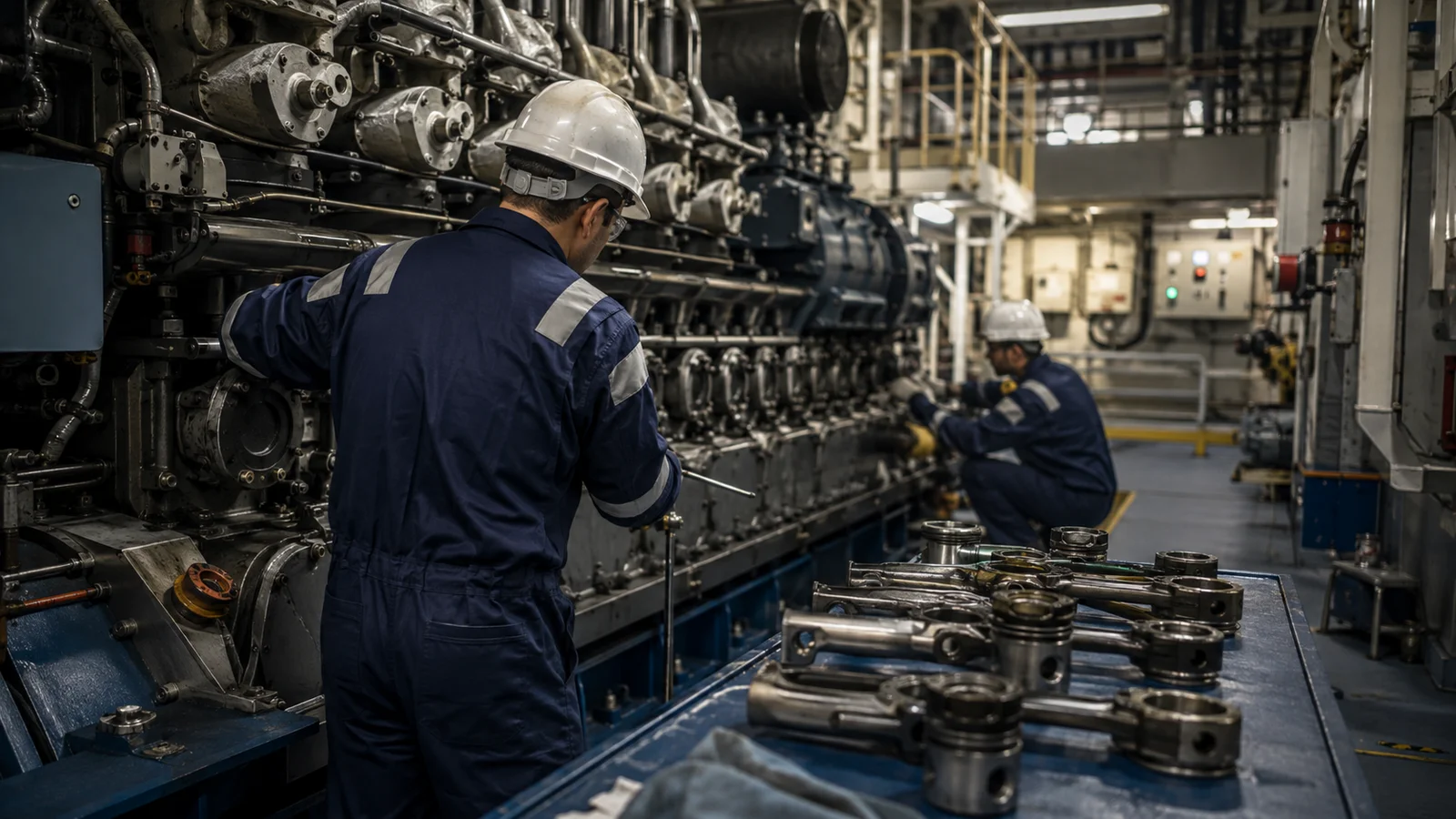
AI-generated editorial illustration.
> Editorial draft — pending specialist insurance and, where relevant, legal/compliance review. Updated 7 September 2026. Examples are hypothetical; the issued policy and applicable law determine actual cover.
Loss of hire insurance addresses an agreed income exposure when a vessel loses earning activity following the event defined in the policy. It is commonly arranged alongside hull insurance because repairs can interrupt earnings while operating and financing costs continue.
It is not a general guarantee of profitable trading. A weak freight market, lack of employment, customer default or a delay unrelated to the insured trigger may fall outside the arrangement. The first task is to understand exactly what activates the cover.
Read the trigger before the daily amount
Many loss-of-hire arrangements connect cover to vessel damage recoverable under the agreed hull conditions, with specific provisions for other events where included. The relationship must be checked against the actual hull policy, particularly if different wordings or insurers are used.
The Nordic Plan’s loss-of-hire chapter provides a primary example of a detailed framework covering trigger, daily amount, time calculations and repair issues. Its commentary distinguishes damage-related income loss from general commercial problems. These are the terms of that framework, not a universal definition of all products. See Nordic Marine Insurance Plan, Chapter 16: Loss of hire and Nordic Plan commentary: principles of loss of hire.
Ask what happens when physical damage is below the hull deductible, when only part of the vessel’s earning activity is affected or when the casualty becomes a total loss. Each question can produce a different result under the wording.
Agree a supported daily amount
The daily amount should reflect the policy’s valuation approach and the insured’s financial interest. Charter hire, expected earnings and continuing costs are related but not identical figures. Provide the commercial evidence requested and explain seasonal or contractual variations.
Check whether the amount is agreed or subject to later evidence of actual loss. Identify currency and any deductions for savings or earnings that continue. Do not assume that the highest number the business can imagine is automatically an acceptable insured daily value.
Coordinate the arrangement with finance and chartering. A charterparty may suspend hire under an off-hire clause, but the insurance policy has its own trigger and adjustment rules. The contract’s use of the words “off hire” does not decide insurance recovery.
Understand time deductibles and limits
A waiting period or deductible expressed in days leaves an initial portion of qualifying time with the insured. The maximum number of days per casualty and in the policy period limits the potential indemnity. Read how separate incidents and repeated damage are treated.
The counting method matters. Calendar time, partial incapacity, repair-related waiting and overlapping causes may require adjustment. A vessel can be out of service for longer than the number of days accepted under the policy.
Ask whether limits reinstate after a casualty and on what premium terms, if any. The owner should understand the remaining protection after a claim rather than assume the original annual limit is always untouched.
Coordinate repair decisions with both insurers
Hull and income insurers may share an interest in prompt repair but assess costs differently. A faster yard may charge more, while a cheaper yard may require a longer voyage or waiting period. The policy may contain specific rules about yard choice and costs incurred to save time.
Notify both relevant insurers and seek agreement under their procedures before making avoidable commercial commitments. Keep safety and necessary emergency action central, while documenting why decisions were made. A coordinated repair plan helps reduce later disagreement.
A published insurer description of loss-of-hire cover illustrates the relationship with underlying hull damage and the need for defined terms. See Gard: loss of hire cover. Actual cover requires the full policy and schedule.
Separate casualty repairs from owner’s work
An unscheduled yard visit often creates an opportunity to perform maintenance or upgrades. Record which work is necessary because of the casualty and which was planned independently. Identify the time each task requires and whether it affects the critical repair path.
Preserve survey reports, repair specifications, tenders, purchase orders, spare-part correspondence, yard progress and sea-trial records. The claims team needs to understand why the vessel could not earn during each period claimed.
If a part is delayed, record order dates, availability, alternatives and the reasons for the chosen supply route. A broad statement that the ship was “waiting for repairs” may not explain the whole period.
A hypothetical time calculation
Assume, only for illustration, a policy with an agreed daily amount of USD 10,000, a 14-day deductible and sufficient remaining limits. A covered casualty is accepted as causing 30 qualifying days of complete loss of earning activity. On those simplified assumptions, 16 days remain after the deductible, producing USD 160,000 before any other applicable adjustment.
The numbers are not a market rate or recommended limit. If five of the days were attributable only to unrelated owner’s work, or the vessel retained some earning ability, the result could differ under the policy’s rules. An actual claim requires evidence and adjustment.
This example shows why the daily amount alone is insufficient. Trigger, qualifying time, deductible and remaining limit must all be established.
Build the submission around the income exposure
Provide the hull terms, chartering model, earnings basis, claims history, repair access and desired indemnity period. For specialist vessels, explain spare-part and yard constraints that could prolong a stoppage. Consider how long the business can fund retained downtime.
Before binding, align the policy dates and vessel identity with the hull programme, resolve any wording mismatch and confirm outstanding conditions. Keep a casualty procedure that alerts the income insurer promptly. Loss of hire works best when the commercial and technical teams can document both the damaged asset and the time it prevents the vessel from earning.
Frequently asked questions
Does an off-hire notice automatically create an insurance claim?
No. The charterparty’s off-hire provisions and the insurance trigger are separate. The event and lost time must satisfy the policy.
Does loss of hire cover an unchartered vessel?
The result depends on the wording and evidence of insured earning activity. Ordinary lack of employment or weak markets should not be assumed covered.
Can planned maintenance be done during insured repairs?
It can be operationally sensible, but costs and time must be separated. Simultaneous-work provisions may affect the indemnity calculation.
Related reading and next step
Hull & Machinery Insurance: Complete Guide for Vessel Owners; What Affects Hull & Machinery Insurance Premiums?; Insurance Considerations for LNG and LPG Carriers.
Prepare a marine insurance enquiry with the relevant vessel, cargo and voyage details. Availability requires underwriting, compliance review and confirmed capacity. An enquiry, estimate or payment does not by itself establish cover.
Sources and editorial review
- Nordic Marine Insurance Plan, Chapter 16: Loss of hire
- Nordic Plan commentary: principles of loss of hire
- Gard: loss of hire cover
Prepared by the MarineEnergyCover editorial desk. No individual expert reviewer has yet approved this draft. Source references describe their own legal regimes or policy forms and do not establish MarineEnergyCover’s regulatory status, authority or available terms.
Frequently asked questions
Does an off-hire notice automatically create an insurance claim?
No. The charterparty’s off-hire provisions and the insurance trigger are separate. The event and lost time must satisfy the policy.
Does loss of hire cover an unchartered vessel?
The result depends on the wording and evidence of insured earning activity. Ordinary lack of employment or weak markets should not be assumed covered.
Can planned maintenance be done during insured repairs?
It can be operationally sensible, but costs and time must be separated. Simultaneous-work provisions may affect the indemnity calculation.
Sources & further reading
- Nordic Marine Insurance Plan, Chapter 16: Loss of hire
- Nordic Plan commentary: principles of loss of hire
- Gard: loss of hire cover
General information, not a coverage determination or offer. Actual cover is subject to policy wording, insurer terms, underwriting and applicable law.