
Shipbuilders Risk Insurance: From Keel to Delivery
Shipbuilders risk insurance concerns agreed physical loss or damage during vessel construction and related stages identified in the policy.
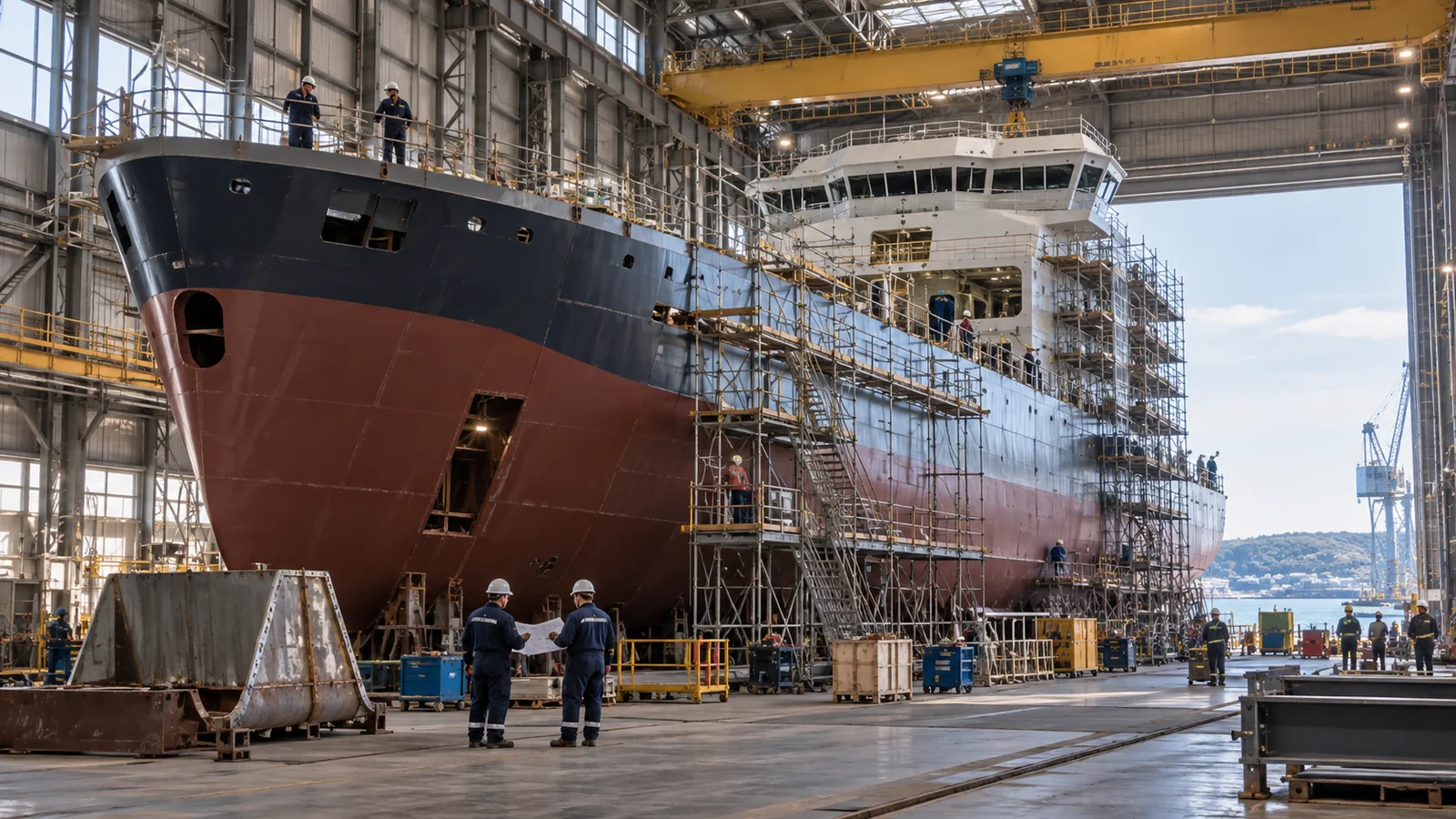
AI-generated editorial illustration.
A vessel under construction changes value, location and operational status before delivery. The transition from fabrication to launch, trials and acceptance needs to be visible in the insurance arrangement.
What is shipbuilders risk insurance?
Shipbuilders risk insurance concerns agreed physical loss or damage during vessel construction and related stages identified in the policy. The insured interests, contract value, materials, locations, launch, trials and delivery provisions require specific agreement. It is distinct from the yard's liability insurance and the vessel owner's ordinary operating programme.
Follow value through the build
| Stage | Question for the insurance file |
|---|---|
| Materials and equipment | Are off-site and owner-supplied items included? |
| Assembly | How is increasing value declared or measured? |
| Launch and trials | Which operations and locations are agreed? |
| Delivery | What event ends construction cover and starts operating cover? |
Marsh's shipyard overview distinguishes builders risk and repairers' liability arrangements. Use that distinction to organise the enquiry, not to assume a particular provider's terms apply to the project.
A fictional delivery gap
A vessel finishes trials but formal acceptance is postponed while minor work continues. The builder and buyer should establish which insurance remains in force, what activities are permitted and when the operating policy begins. “Practically complete” may not be the contractual event that either policy uses.
Record the building contract's risk-transfer provisions alongside the proposed insurance dates. If the vessel moves to another yard or carries out additional trials, obtain the required review before treating those activities as included.
Describe the complete project
For underwriting, provide vessel type, design, contract value, construction schedule, yard locations, subcontractors, owner-supplied equipment, launch method, trials and intended delivery. Explain unusual technology, conversion work or prototype features. Separate declared project values from the value of a completed operating vessel.
Ask about defects, faulty design or workmanship, consequential damage, testing, delay and liquidated damages. The cost of correcting defective work may be treated differently from resulting damage. No general builders risk label answers those questions.
Coordinate the parties' interests
Identify builder, owner, financiers and subcontractors and clarify their insured status. Review waivers, indemnities and responsibility for deductibles with appropriate advisers. Do not assume that naming a party on a certificate reproduces every protection promised in the construction contract.
Following damage, preserve engineering records, work logs, photographs and the project schedule. Notify insurers promptly and obtain agreement where required before repair, replacement or destructive testing. Separate physical damage costs from delay-related financial consequences.
Read hull and machinery fundamentals and vessel documentation. Review hull enquiries and contact the team about construction risks so specialist availability and the delivery transition can be assessed explicitly.
Key takeaways
- Shipbuilders risk insurance concerns agreed physical loss or damage during vessel construction and related stages identified in the policy.
- Agree the contractual and insurance milestones explicitly, including trials, delivery, acceptance and any outstanding work.
Frequently asked questions
What is shipbuilders risk insurance?
Shipbuilders risk insurance concerns agreed physical loss or damage during vessel construction and related stages identified in the policy. The insured interests, contract value, materials, locations, launch, trials and delivery provisions require specific agreement. It is distinct from the yard's liability insurance and the vessel owner's ordinary operating programme.
When should builders risk cover hand over to operational insurance?
Agree the contractual and insurance milestones explicitly, including trials, delivery, acceptance and any outstanding work.
Sources & further reading
General information, not a coverage determination or offer. Actual cover is subject to policy wording, insurer terms, underwriting and applicable law.